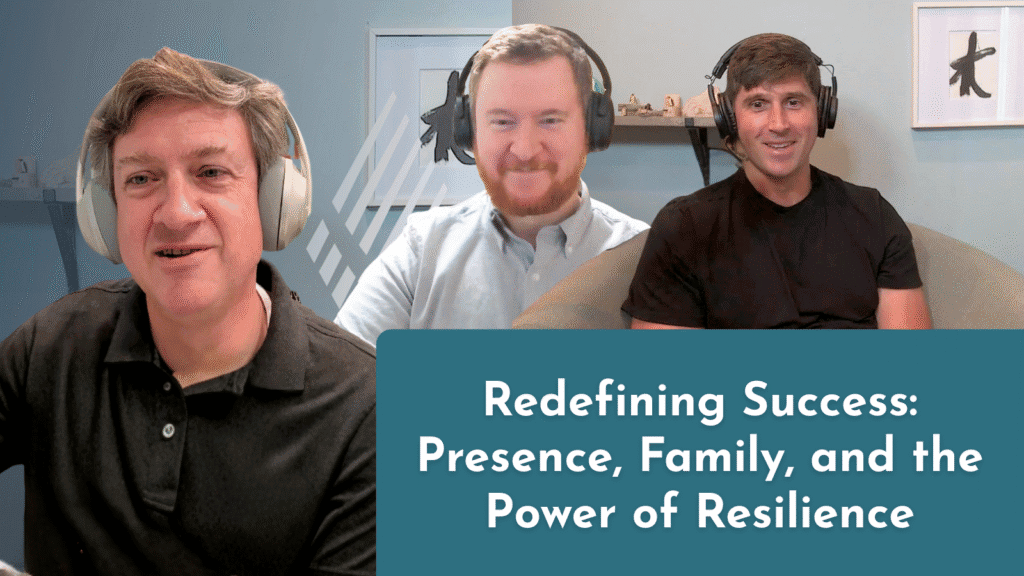
[00:00:00] Intro: Every number on a balance sheet tells a story, late nights spent building something meaningful, the risks taken, the difficult conversations. The lessons learned along the way, but true wealth is not measured in dollars. It’s woven into the stories that we create, the experiences that shape us, and the memories that outlive us.
Welcome to The Living Beyond The Numbers Podcast with Jude Boudreaux from the Planning Center. This show is not about spreadsheets and financial jargon. It’s about real conversations and powerful stories. That help you align your money with your values, your dreams, and your legacy, because at the end of the day, it’s not about how much you have, it’s about the life you wanna live and the stories you leave behind.
Now onto the show.
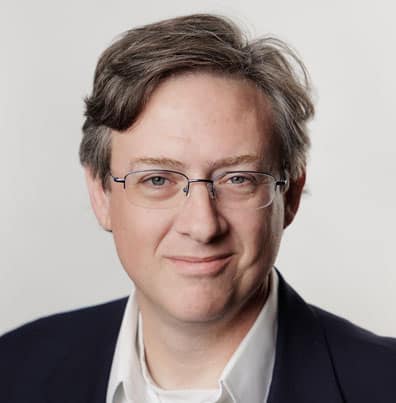
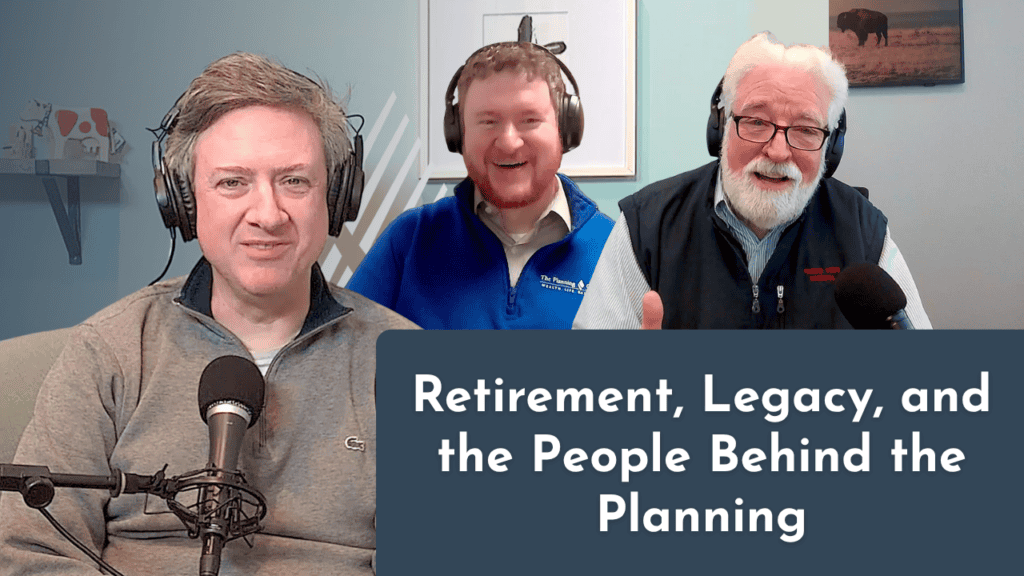
[00:00:51] Jude Boudreaux: Hey everybody. Thanks for joining us for another episode of Living Beyond the Numbers podcast. I’m your host, Jude Boudreaux. I am here with our director of [00:01:00] positivity, Caleb Irvingdale. Hello. And we’ve got a very special guest today who’s part of a series that we are doing with founders of our different offices.
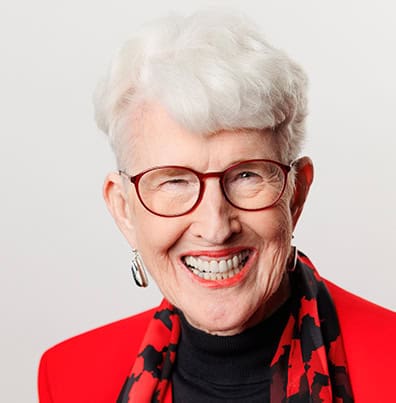
And so today we have Cicily Maton, who’s founder of our Chicago office. So Cicily, I’m really glad to have you on the show.
[00:01:16] Cicily Maton: I’m glad to be here.
[00:01:17] Jude Boudreaux: Yes, absolutely. Well, um, no, it’s wonderful to see you here. Uh, tell us a little bit about what you’ve been up to since you retired. It’s, I know you’re, you’ve not been, uh, letting the grass grow under your feet.
[00:01:28] Cicily Maton: No, I’ve been seeing the world and I think maybe in 23, uh, my air miles were something like 40,000. In 24, they were 70,000. Last year they were 50,000. So most of those were with United Airlines. So, you know, I’m at highest status on the air on the airline and I’ve been to probably 10 to 12 different countries or regions.
And um, [00:02:00] it’s fascinating. I think the most wonderful thing is, uh, not necessarily the scenery, um, but the people I meet along the way.
[00:02:11] Jude Boudreaux: Yeah. Oh, certainly. That’s amazing. Uh, any anecdotes or something comes to mind as you think about the people that you’ve met along the journey?
[00:02:19] Cicily Maton: Well, one of the things that I, this summer, um, I asked the, the, um, agency that was, uh, putting this together for me not to have so many walking tours.
Um, I think in Kyoto alone, there are. 500 temples and 1000 shrines, and I said, I don’t need to see all of them. And so what we they did is they substituted experiences. So I had a class with a calligraphy master. I went to a woman’s home for the tea service. [00:03:00] I, um, tie-dyed my own scarf in a silk factory. So it was those kinds of things that, uh, stand out, um, after a trip.
[00:03:12] Caleb Arringdale: Yeah. Whenever we talk to people about their favorite things, it’s never necessarily what they saw, it’s what they did. It’s those experiences that really mm-hmm. That really move people. So that really tracks. That’s cool to hear.
[00:03:24] Jude Boudreaux: Great. Well, you know, part of what we’re here to, to do is to talk a little bit about kinda the history of the firm and how things came to be.
So, you know, tell us a little bit about that. You know, in the early eighties you were changing profession, so, right. Yeah. How did you come to be a financial planner?
[00:03:41] Cicily Maton: It’s an interesting story. I was, uh, actually selling limited partnerships and I walked into, uh, someone I knew who was a potential client, uh, and he didn’t, he said, it sounds interesting, but you’ll have to see my, uh, advisor.
And he sent me to this [00:04:00] advisor. And, and I, so rather than me selling, selling him a, a, a limited partnership, I asked the, the advisor, how did he get to be that? What’s the path to being an advisor? And he told me about the certification for financial planning, um, which I subsequently, uh, took the, uh, course and I found I loved it.
Uh, working with people is just great. And I was lucky enough at the beginning to have, um, a client who was in divorce and she was panic stricken. She couldn’t focus, her lawyer couldn’t communicate with her, and I act as a bridge. And it, when I found out that there were no financial planners working in that area.
Um, and you have to remember back then there weren’t a lot of financial planners at all anyway, [00:05:00] let alone women. So it was a kind of a rarefied field, and I was lucky enough to have been introduced to an area that had nobody in it, but had a great demand. And that’s what really, um, lifted the. My, my plan for a financial planning firm off the ground, and luckily Michelle was working with me by that time and she and I built, um, a bus business around the fact that from our earlier experience.
People weren’t making decisions based on rational facts. They were making them based on emotions. And sometimes those emotions were counterproductive to their welfare. So, um, Jude, you may me have remembered that there was a man by the name of, um, Richard [00:06:00] Wagner. Uh, and he, along with George Kinder, had a.
Seminar in 1994 at one of the professional organizations, and Michelle and I saw the list and, and we decided it was, that was something we wanted to hear because it was about money and living and, and life, and we thought we were the only people in the world asking clients questions about, well, how do you feel about money?
What are your goals in life? Nobody was asking those questions and we thought we were the only ones. Well, we found out, uh, that there were others and that led to an organization called Ne Rudin, which is still going today. That came, became something like a think tank. And out of that came books, [00:07:00] seminars, people.
Researching this. And then of course the psychology profession got involved because money and emotions tend to be part of their requests of clients. And then the economists got involved. So out of that came lots of information, um, and validation that the path that we had chosen was the right one. So, um, it’s become much more sophisticated these days than our original things that we ask.
So clients who come to a firm like the Planning Center are gonna find themselves, um, perhaps de delving into their own thoughts. Emotions, backgrounds to get better positioned [00:08:00] to make better decisions. So that was a long answer to how did I start and where did we get, but it, it’s been a wonderful trip and, uh, working with my daughter for all of those years has been a and a special, um, benefit to me.
And I hope her, um, we’re still really good friends and still see each other often. So, um, it must have been working because, um, uh, we managed to, uh, stay together. Um, and even in the times when we had differencing opinions, we found ways to get through it.
[00:08:48] Caleb Arringdale: Yeah. A quick question. So in your experience with, in the planning field, how much of it is hard, rational numbers and how much of the, this job really is dealing with emotions?[00:09:00]
[00:09:00] Cicily Maton: I’m gonna give that give a little historic answer. In the beginning, there were no softwares. We had to develop our own. Um, I spent a great deal of time developing spreadsheets to track this, track that keep track of this measure that do this, um. But now with, uh, AI assistance and the kind of software that is available on, uh, for financial planning firms, I think that it has got to be more like 10% in the hard numbers and 90% talking about life and money and how those things interact together.
You are. I see you nodding. So you must, uh, have had that experience.
[00:09:51] Caleb Arringdale: I agree.
[00:09:52] Cicily Maton: Yeah. Okay.
[00:09:53] Caleb Arringdale: Mm-hmm.
[00:09:54] Cicily Maton: After the background stuff was done. A typical meeting when I was [00:10:00] still working as a planner would be about 10 or 15 minutes on investment returns, meeting your goals, and the rest of the time was, what are you doing?
Where have you been? How are your family? What’s your dog doing? I mean, there was normal stuff and that was. Building trust and building relationships and building, um, a common ground so that when something happened in one’s life, we were better able to step in and help them deal with that transition, whatever it was.
You all know that when you are is a transition. There’s always heightened emotions and being able to step into a client’s life and help them calm that down and put them in the proper place so [00:11:00] that then they can step in and make the right moves to move forward.
[00:11:05] Jude Boudreaux: It’s a sacred space to be in. It’s a, to be able to be in those conversations, to be parts of.
Those decisions that families are making at really important times, important, difficult times when, when there’s a loss. And important, exciting times when there’s a, a new opportunity ahead. And, um, you know, and of course I got to share a lot of those with you. It was, you know, Sicily and I worked together in the Chicago office for quite a long stretch before the pandemic.
Uh. Fly there regularly. And it’s nothing like learning when you get to sit alongside of, of somebody who’s been doing it for many years. And, um, I get to, you know, help teach some of those things now as we grow a new planner. So it’s a, it’s a wonderful part of the longevity of the company. Um, so let’s talk more about that, about like the emotions and the money.
’cause the, you’ve written about it saying it’s important to first talk about what’s going on in life [00:12:00] before plotting out a course of action. So. I mean, you’ve talked a little bit about that, but when did that really come to the forefront or where that become a, a touchstone for you?
[00:12:10] Cicily Maton: Well, for us in the beginning, um, that was front and center because neither of you have gone through a divorce, but that is place where the human emotions are front and center, big time.
Uh, so we were dealing with those emotions immediately, uh, and trying to put them in its proper place so that one can be more calm, be more focused on, uh, the present and the future rather than the past. Now, sometimes that would take, depending on the person, quite a long time. [00:13:00] It’s not a fast process, and even after the divorce is over, there’s still all of the, um, decision making around, uh, moving, uh, new places, new things, maybe all kinds of transitions on top of that.
So the job doesn’t stop. Um. But what we did find in those early years working mostly with divorce, is that divorced people would recommend their brother, uh, their aunt, their uncle, their parents. And those people weren’t going through divorce, but they were going through other things. They were going through buying a house, buying a business, selling a business, retirement.
And we found out that they had emotions too. So, uh. If you’re in a, a situation with a client where there isn’t something going on, it’s probably just waiting for [00:14:00] something to happen. So I think that. Planners probably in in the planning center, are dealing with the emotions almost all the time. They’re just maybe not aware of it because it becomes so ingrained in the way and the approach that we make with clients.
[00:14:19] Jude Boudreaux: There’s a, I wish I could remember who said it. There’s a quote I use often of, you know, that we’re not rational beings that also have feelings, but we’re emotional beings that also think, and the emotions are the primary part of this. That’s right. Yeah. So when we’re in our work with these families, we have to be centrally aware of that and how that can affect decision making and, uh.
So many parts that have financial ramifications, even if it doesn’t start with money.
[00:14:49] Cicily Maton: Right. Well, you know, I’m sure that every planner at the planning center has the same, uh, experience I do. But yeah, learning all of [00:15:00] these techniques from people like psychologists and economists like Danny Kaman, it helps me make decisions about myself.
Because you bring that home with you and you apply it, so it, it’s made my retirement, um, calmer, more pleasant, less stressful, and um, that’s a wonderful thing.
[00:15:32] Caleb Arringdale: I think that’s a great point that you’ve been able to use these own things in your life. What is something you’ve really taken away from working with clients that you’ve applied personally, especially in retirement?
[00:15:42] Cicily Maton: Luckily I have Michelle as a sounding board if I have, um, issues I need to address. Um. I use her to validate that I’m on the right track. [00:16:00] Um, and to tell you the truth, um, it, it generally focuses around health issues these days. Everything else is pretty steady and easy for me, but uh, at 89 you’re constantly on a slippery slope.
You’re great today, but tomorrow you might wake up and not be so great. So, uh, uh, you have to apply that same principle of recognizing the emotions, but using your thinking brain when it comes to healthcare. So I think big time, I’ve applied that in my own life, in that area.
[00:16:51] Jude Boudreaux: Yeah. Well one of the questions that I actually had on on list was talking about, you talked about, you know, clearing your mind before meetings, but [00:17:00] certainly other healthy habits that, you know, have helped you, you know, get to 89 and not only that, but still continue to, you know, fly tens of thousands of miles a year.
Right. So, um, yeah. So how do you feel like what practices kind of helped you over that, you know, with this longevity and with this idea of a long life?
[00:17:18] Cicily Maton: Well, certainly I review my financial plan. Uh, and with Michelle, because, uh, things happen and
you wanna make sure that you’re, you’ve not. Uh, overlook something or you’ve made a decision that’s emotional rather than, uh, rational. Uh, and so when it comes to, uh, a review, uh, my own plan, um, I do the numbers, um, and then I review it with Michelle and, um, it’s uh, [00:18:00] same discipline that we use with clients.
And, uh, so it’s um, uh, no different when I apply it in my own life.
[00:18:10] Caleb Arringdale: I think that’s interesting that you identify that you need someone as a sounding board, because I think of so many financial planners use other financial planners for themselves personally, because even though we might right. We might be able to be rational to other people.
Sometimes being rational with ourselves is pretty tricky.
[00:18:27] Cicily Maton: It is. That’s a goal that should always be front and center for us. All of us.
[00:18:33] Caleb Arringdale: Absolutely. Yeah.
[00:18:35] Jude Boudreaux: Well, um, I wanna take you to, uh, the pandemic and um, something that you kind of helped us do during that time was organize kinda zoom meetings for clients to talk not so much about.
Financial implications of things, but about their feelings, uh, you know, their hopes and fears and things while we were navigating this kind of unprecedented circumstance. So what kinda led you [00:19:00] to that and what do you think you learned from those conversations?
[00:19:03] Cicily Maton: It’s always interesting to me that we tend to be our, well we, not everybody, but the goal should be to be our best selves in times of crisis.
Planners often, uh, have to react to circumstances, um, like a down market, even though we, uh, teach clients and constantly remind clients about the philosophy that we, uh, use in investing. There’s always a few people. Who forget that lesson the minute the market goes down and it’s up to us to step in and calm their fears, remind them of why we made the decisions we [00:20:00] did and why they’re fine and they will be fine.
And being a leader in, uh, interpreting. The world around us in a way that gives clients hope and makes them feel like I’m in good hands. Um, is I think something that all planners have to embrace. So I think the pandemic was just one of those places. Um, I’ve been doing planning for a long, long time and, um, we had many crises along the way.
Uh, and we had to deal with it in whatever way was possible. The pandemic was especially challenging in that we couldn’t have [00:21:00] people come together. There’s all, in my experience, uh, bringing people together in a time of a crisis and having them share. Their experiences and their feelings makes everyone feel a little bit like, I’m, I’m on a ship, not, not a boat that’s bobbing in the water and gives them, uh, strength from that combination meeting that lets them then deal with it in their own way.
The pandemic was especially challenging in that we couldn’t do that. So we had to find ways to keep touching people in other ways so that they knew that we were there. They knew that they had access, they knew that somebody was behind them and had their back. So it was, I think, if I [00:22:00] remember correctly, which sometimes I don’t always remember correctly.
That’s one of the fallacies we all have, is that we think that we remember things. This way, and it’s not always the way it is, but anyway, during the pandemic, I, I think we all, uh, quickly got used to Zoom quickly changed our client’s perspective of I can’t use that thing to, yes, I can use that thing. Um, so it was a matter of.
Just keeping in touch with them. An email here and an email there, another email, a little call it. And so it was more individualized than I would’ve liked, but that was the circumstances we were dealing with.
[00:22:53] Jude Boudreaux: Sure. And I think that’s the, you know, one of the benefits of a, a firm like ours is that you don’t [00:23:00] have.
You know, thousands of clients, we can, uh, have some of those individualized, you know, touches and be able to, you know, do those reach outs.
[00:23:10] Cicily Maton: Well, you know, that’s interesting. I just real recently made the decision to go to a concierge doctor and that very reason is because my primary physician saw 2000 to 3000 patients a year.
It wasn’t that he wasn’t really a, a fine, fine doctor and did was terrific, but he just simply was overloaded. My concierge doctor has something like 200 to 300 to take care of. And so, uh, I made the decision that that was the course that I wanted to go.
[00:23:53] Jude Boudreaux: Sounds great. I think it’s, um, like many things we choose to, you know.
Do the things that are important to us in life and use [00:24:00] our financial resources to support those things. And so, right. So yeah, I think that’s a, that sounds great. And it seems like it’s been a good fit for you as you’ve navigated that pathway. Mm-hmm.
[00:24:11] Caleb Arringdale: So we’ve talked a lot about things that have worked really well for you.
Have you had any failures in the business? Anything you’ve tried that just did not work that you learned from?
[00:24:22] Cicily Maton: I’m sure there are hundreds. But, um, I tend to have a very positive outlook about life and, um, just like my own personal, um, hiccups in life, I tend to color them in, uh, learning experiences. So, Caleb, I have to dis, I can’t, I’m gonna disappoint you.
I can’t remember. I just know there were a lot of them.
[00:24:53] Caleb Arringdale: That’s probably in a lesson in itself right there. To not focus on those failures to just say, Hey, try something different. Stay positive. Right. [00:25:00] And it’s obviously been extremely successful, so that’s great.
[00:25:03] Jude Boudreaux: One question the team had, I wanna make sure I, I get to ask.
Um, yeah. You answered financial planning, you, which is still predominantly a male profession, but absolutely was, you know, when you began in, in that world. So can you share a bit about what that was like and if there was a moment or experience that captures what being a woman in that environment was like for you?
[00:25:23] Cicily Maton: I was lucky enough to have, um, a number of male planners who I became lifelong friends with, um, who encouraged me. Even when I heard these snide remarks from people as I would walk by or after I would make a presentation, um, it was more like, don’t pay any attention to it. You know, it, just [00:26:00] focus on what you’re doing, focus on your client and, and building your business.
Uh, and don’t pay any attention to ’em. It’s, you know, uh, um. It was counterproductive and I was not a part of any movement. I just did my thing the way I wanted to do my thing.
[00:26:23] Jude Boudreaux: Yeah. Perfect. Well, um, I’m curious if you had any thoughts to share just on, um, I wanted to ask you to talk a bit about this kind of working with Susan Bradley and financial transition and this idea of, you know, working with families in transition.
You’ve touched on this already, but is there anything that comes to mind for you from. Kind of that, that long relationship and those experiences?
[00:26:45] Cicily Maton: Well, you know, Susan and I met, um, I think it was 1990 in Washington, DC at a conference on the future of Social Security. [00:27:00] And we sat at the same table, well for lunch, and we’ve been friends ever since.
That’s a long time. So when we would go to conferences, we almost always bunked together or, or hung out together. Um, in the early years, we would talk about our work, uh, and how it, um, coincided and what things were in common and what things were different. Her area of, um, concentration were the ultra wealthy.
And she lived in West Palm Beach, and that’s a concentration of a lot of, uh, very, um, high net worth families. And um, so I was working in the area of mostly divorce and so we would talk about the emotions that we found our clients with and how similar they were. How could we capture on [00:28:00] that? So, luckily, uh, Susan organized an, uh, the Sudden Money Institute.
Uh, she was looking for people to help her out, and I think Dick Wagner and I together wrote a check each for $10,000 and handed it over to her and said, go. You’re the one to do it. And she, the one thing about Susan is as things change, as clients change, as the environment changes, as she learns new things from, uh, research, um, she comes up with methods and processes that help the practicing financial planner do their job better.
And so, uh, working with her has been. Joy and I have, um, enjoyed every minute of being, uh, a certified financial transition. [00:29:00] She, she and I both talked about how the transition in life had patterns. And she took that and developed, uh, a methodology by which planners can take clients through transitions because they, they tend to have similarities from time to time, from issue to issue, from transition to transition so that they’re repeatable.
And, um, I know that. When I would have a problem with a client, and I know Michelle has relayed, relied on Susan too. I, I just pick up the phone and I call Susan and have a brainstorm with her about this is the situation. This is how the client is exhibiting this, this behavior. What can, how can we intervene here?
And Susan comes up with a, with an answer [00:30:00] or two, and then pretty soon she’s got it on her website for other planners to use in situations that are similar. So she has enriched the planning process for the whole. For everyone who, who is in this field in some way and has made an impact on the way people think about financial planning.
So it, it’s been a real joy to see her growth and her path as she has, um, woven it through the years.
[00:30:42] Jude Boudreaux: Wonderful. Well. I’ve got a closing question and then we have some rapid fire ones that, uh, we often like to go through with our guests, but mm-hmm. Um, you know, I, and it’s hard to boil this down, I’m sure to like one thing, but if, if you were sitting with a financially successful person or a [00:31:00] couple and they’re, you know, in their forties and looking forward, they’ve got some resources, but not hundreds of millions of dollars, they’ve gotta be careful.
Right? So what’s the piece of wisdom that you’d most want to share with them?
[00:31:14] Cicily Maton: The thing that I would tell a couple is their success will greatly be enhanced if they’re on the same page.
[00:31:28] Jude Boudreaux: Wonderful
[00:31:29] Cicily Maton: marriage is a partnership and each individual has their own unique personality backgrounds, goals. And it isn’t often that a couple can go through a long marriage without some conflict, so the planner should recognize [00:32:00] when those conflicts are getting to the point where they’re toxic.
And recommend an appropriate approach either through marriage counseling or um, through their church, uh, affiliations, some outside source to mediate them coming to a common ground. Um, when it gets to be really touch and go. I gave this boy advice to someone not too long ago that was on the verge of thinking about divorce, and I said, look, here’s what I would suggest you think about if the issue that you’re conflicted about is so important to you [00:33:00] and your spouse.
Is an impediment and causing great stress, then maybe divorce is the answer. But if your spouse is someone that you want to spend the rest of your life with and is dear to you, and you can’t imagine not being with that person, then give that issue up. Just throw it away, ignore it. It is not important. So I guess my advice to a 40-year-old couple is stay on the same page.
[00:33:45] Jude Boudreaux: Very cool. Well, uh, Caleb, you have a couple of rapid fire questions for us as we pop through.
[00:33:55] Caleb Arringdale: Yeah, definitely. And thank you so much. Cicily. This has been fantastic. Really enjoyed listening to your [00:34:00] insights, but our, just three final questions. Uh, first of all, we ask this to everyone. What’s your favorite animal?
[00:34:07] Cicily Maton: Well, I have to say I have two horse from a domestic side and elephants out there in the wild.
[00:34:15] Caleb Arringdale: Very nice. And for someone who’s traveled around the world as much as you have, you’ve seen many, many animals. So, and I know you have both been in, you and your daughter have been involved in many different conservation efforts, so that’s, that’s cool.
[00:34:26] Cicily Maton: Yes.
[00:34:27] Caleb Arringdale: That’s great. Uh, favorite trip you’ve ever done?
[00:34:30] Cicily Maton: Because it’s my right in my mind. I think a recent trip last, uh, September was to Zimbabwe. We hired a, a, a personal guide who took us through the whole trip, the same guide. And he was, uh, first of all, he had a great sense of humor, so it was fun to be around.
He was very knowledgeable. He was also know every Burden Zimbabwe, which made Michelle very happy. Uh, and he [00:35:00] was a professional photographer, which really made Mike happy because he loves photography. So, and not only that, he’s good looking. So that made me happy.
[00:35:12] Caleb Arringdale: That is excellent. No many thanks. Uh, final question.
What is the best advice you have ever received?
[00:35:19] Cicily Maton: I received some advice from, uh, one of my teachers when I was a junior in high school. Uh, I tried out for a play and I got the lead, and um, I was what, 16, 17. So in one scene. The director asked me to walk across the stage in a very sexy way, and I stopped. I looked at him and I said, well, I don’t know how to do that, and he, you know, my dear, fake it until the right thing comes along.
Well, that stayed with me my whole life. Sometimes you just [00:36:00] have to fake it until the right thing comes along.
[00:36:03] Caleb Arringdale: You know of. So we’ve asked this question to many people, fake it till you make it has come up actually several times. So I think that is, if you don’t feel fully comfortable about something, that’s okay.
Jump in, give it a shot, you’ll figure it out. That’s right. Yeah. That’s great. No, thanks ly. That’s excellent.
[00:36:19] Jude Boudreaux: Yeah. Well, any closing thoughts sis? Anything you wanted to share that we didn’t get to talk about?
[00:36:24] Cicily Maton: Well, I’m just, um, delighted that the planning center, um. So many clients in all of their locations and helps them along their way.
Everybody needs a helping hand, and I think that’s one of the legacies that the planning center, uh, is going to have for a long time.
[00:36:49] Jude Boudreaux: Yeah, no, that’s, um, I feel a lot of responsibility for kind of carrying that forward being, you know, somewhere in between the initial founders [00:37:00] and the people who will, you know, be the next generation.
So, um, so yeah, I think we all very much believe in and embrace that idea that, you know, what, we’re, we’re here to help and we’ll help the people who are along the way, whatever that looks like. So, um. Great. Well, thanks for spending some time with us, Sicily. We really appreciate it. And, um, yeah, always excited to see you where your next adventure is.
So keep us all, keep us all posted.
[00:37:25] Cicily Maton: Well, I think next is, um, a South America tour, and then in the fall I’m, I’m gonna go to China.
[00:37:33] Jude Boudreaux: Fantastic. Well, very cool. Caleb’s been all over South America, so might be, maybe you need to have a different conversation there too, so. Yeah. Good. All right, great. Well, thanks, uh, again Sicily.
And thanks to all of you for joining us for another episode of The Living Beyond the Numbers podcast. Um, you can reach me, I’m judi@theplanningcenter.com. And Caleb is caleb@theplanningcenter.com. And if anybody would like to get in touch with Sicily, email me. [00:38:00] I’m fortunate to work with. Many of the clients that Sicily has worked with for many years.
And so I can make that connection, uh, for y’all out there. So thanks again for joining us, um, and please like and subscribe and we’ll see you in another episode. Have a great day.
[00:38:16] Outro: Thanks for tuning in to the Living Beyond the Numbers podcast. If today’s episode resonated with you, be sure to follow us so you never miss a conversation.
For more resources and to learn how we can help you align your wealth with your life’s purpose, visit us@theplanningcenter.com or give us a call at (888) 333-6986. The information covered and posted represents the views and opinions of the guest and does not necessarily represent the views or opinions of the planning center.
The content has been made available for informational and educational purposes only. The content is not intended to be a substitute or professional investing advice. Always seek the advice of your financial advisor or other [00:39:00] qualified financial service provider with any questions you may have regarding your investment plan.
Investing involves the risk of loss. The information presented on this program is believed to be factual and up to date, but we do not guarantee its accuracy and it should not be regarded as a complete analysis of the subjects Discussed. Discussions and answers to questions do not involve the rendering of personalized investment advice, but are limited to the dissemination of general information.
A professional advisor should be consulted before implementing any of the options presented.