[00:00:00] Intro: Every number on a balance sheet tells a story, late nights spent building something meaningful. The risks taken, the difficult conversations, the lessons learned along the way. But true wealth is not measured in dollars. It’s woven into the stories that we create, the experiences that shape us, and the memories that outlive us.
Welcome to the Living Beyond The Numbers Podcast with Jude Boudro. From the planning center, this show is not about spreadsheets and financial jargon. It’s about real conversations and powerful stories that help you align your money with your values, your dreams, and your legacy. Because at the end of the day, it’s not about how much you have, it’s about the life you want to live and the stories you leave behind Now onto the show.
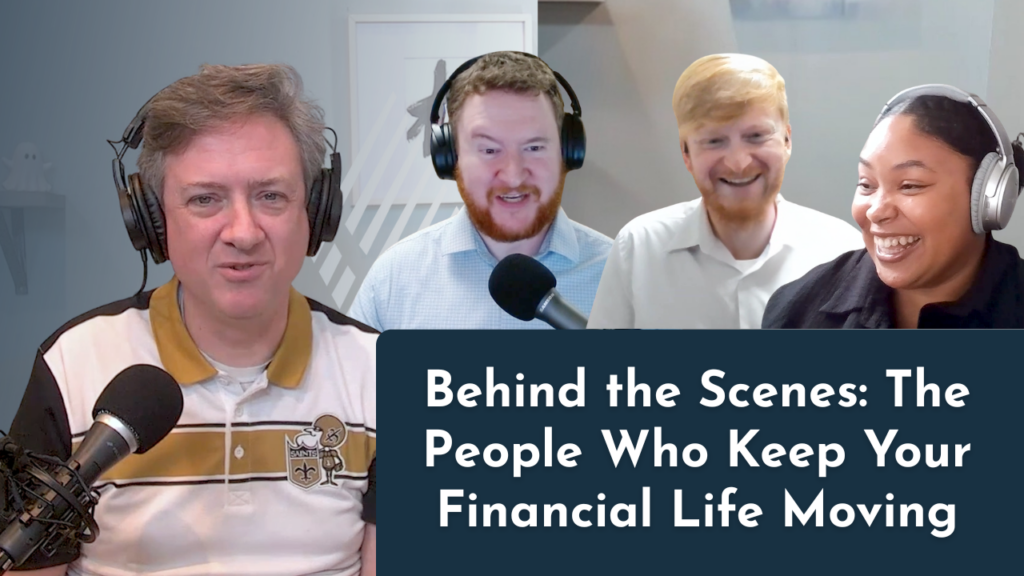
[00:00:51] Jude Boudreaux: Hi. Thanks so much for joining us again for the Living Beyond the Numbers podcast. I’m your host, Jude Boudreau. I’m here with our director of positivity, Caleb [00:01:00] Irvingdale
[00:01:00] Caleb Arringdale: Lou,
[00:01:02] Jude Boudreaux: and today we’ve got a couple special guests from our team, our client service associates team. So we’ve got Jenessa Richie from our Quad Cities office.
[00:01:10] Jenessa Ritchie: Hi. Hello. How’s it going?
[00:01:11] Jude Boudreaux: Perfect. And coming to us from our Anchorage office, we’ve got Crystal Gillum.
[00:01:15] Jenessa Ritchie: Hello.
[00:01:17] Jude Boudreaux: Hey. Great. Well thanks so much for joining us, y’all. I’m, you know, really excited for clients to hear just about the humans that, you know, go behind so many of the things that are happening for them, uh, at the planning center.
And so, um, I’d love to know, like, you know, from y’all, if you’d wanna share just a little bit, like what’s your role, like, what’s your day like for you as you work for the firm?
[00:01:38] Jenessa Ritchie: Yeah, I would say, um, for me it can be, uh, a lot of moving parts. Um, it can be answering phone calls, um, doing a lot of administrative, um, needs, and, um, also a lot with office work, so, you know, ensuring when everyone comes in, everything’s ready to go for clients upon their arrival as well.[00:02:00]
[00:02:01] Krystal Gilliam: Definitely being in a smaller office, I don’t have to deal with too many, you know, in-person clients. But, um, making sure that I’m doing everything for the planners that I need to do, answering phone calls, doing little projects that might be just something that I was assigned to do or found to do. You know, it’s kind of almost like keeping your head on a swivel, but swivels on like three different monitors, so.
[00:02:22] Jude Boudreaux: Yeah, that’s right. We were talking about notifications earlier, and I imagine your roles, like there’s a lot of things pinging at you on the computer. So like tell us a little more about what are some of those, what are some of those notifications? What’s happening?
[00:02:34] Krystal Gilliam: Yeah, I mean, a lot of phone calls. Um, get emails for every meeting that’s scheduled to get emails for client service emails.
You get it for quite everything. Then making sure that you’re doing your tasks still. There’s quite a bit. Yeah.
[00:02:51] Jenessa Ritchie: And yeah, planners are in meetings. Um, a lot of things can come up last minute. So, um, hopping, hopping and moving [00:03:00] direction and assisting with that. So, um, and phone call, you know, rescheduling or scheduling clients, so that can take place as well.
[00:03:10] Caleb Arringdale: Jenessa started in January, which is tax season. And during tax season she becomes an honorary member of our team. So her workload goes from just the normal stuff she does until we give her about, I dunno, anywhere from 10 to 20 hours a week of additional tax tasks to do as well. So that’s a, uh, that gets real busy.
[00:03:30] Jenessa Ritchie: Yeah, that was fun. I thought that was normal, but it’s just for a certain period of time. So. Well,
[00:03:37] Jude Boudreaux: what are some of those other tasks, tax tasks? I have a sense of that, but yeah. Share with our listeners.
[00:03:42] Jenessa Ritchie: Yeah. Well, when it’s, um. Putting the returns together, so making sure it’s in, um, the correct order and, um, calling the clients to let them know we can, they can pick it up and walking through the transmittal sheet with them.
Um, so it’s good for me to understand what’s going [00:04:00] on, um, with their situation as well, so I can help explain it to them or know who their tax, um, advisor is. So if they have questions, reach out to them. So.
[00:04:11] Jude Boudreaux: It’s interesting, you know, half of our senior planners are at the Quad City’s office and, uh, you know, two third, or most of our tax team, I guess three quarters of the tax team is in that office as well.
So it’s a much bigger space than say, our New Orleans or our Anchorage offices. But, uh, you got a lot of those things that are, are happening in the, when it comes to the spring of every year. So, um, I guess tell a little bit about, you know, what do you think service, you know, means when you’re working with successful families?
Uh, what. What do you feel like that means for each of you?
[00:04:44] Jenessa Ritchie: I feel like it means more, um, than just being a transaction relationship, but more, um, getting to know them and making sure they, we can create a space for them to feel heard, um, and understood. And I really like the quote. [00:05:00] Um, it’s not what we said that makes an impact, but it’s really how we make them feel.
So to me that. Is what energizes me to get me going, um, to start my day when assisting with clients.
[00:05:12] Krystal Gilliam: I definitely think that like client service goes far beyond just doing like paperwork or answering phone calls, but also understanding, um, client’s goals. So with like successful families, service is anticipating their needs and personalizing.
Um, like emails, a client might get married and you wanna send them a congratulations of them getting married. And so just being more personable then. Just as Genesis said, having a like transactional relationship.
[00:05:42] Caleb Arringdale: Yeah. I think it’s easy for someone to think that the person who’s answering the phone is simply like.
The person who sends the call to the right person, right, that you’re just like the, the, the viaduct to the, to another person. But for you guys, you’re able to answer most of those questions yourselves. I mean, obviously sometimes you send it off to a planner or tax person, whatever, [00:06:00] but so much of it, you guys are very involved in, in the client’s transactions.
You know a lot about the client’s lives and are able to handle a lot of that stuff.
[00:06:08] Jude Boudreaux: Yeah. So. I was talking with an, a friend of mine who’s an advisor and he works with, um, kind of a certain kind of families, and we were talking about our work and he’s like, I don’t know if I’d wanna work with like wealthy families like you do.
I was like, well, why not? He’s like, well, ’cause I just don’t know about those kind of people. I was like, I don’t know, like we work with nice people that have complicated problems. Like I, I don’t think there’s, I don’t feel like there’s any difference between they’re humans. They do all the same things that we all do.
And so, curious to get your thoughts, like was there anything that surprised you when you started working with us and we work with some, you know, higher income or higher net worth families, was there anything that stood out to you or that surprised you?
[00:06:47] Jenessa Ritchie: Yeah, that’s a good question. Um, I think seeing them as people, you know, kind of humanizing them, um.
Really. Makes a big impact. Um, you know, we all deal with very similar [00:07:00] things like relating to each other as humans.
[00:07:03] Krystal Gilliam: I do agree. It’s like how human their challenges are with them experiencing like decision fatigue and having family stress. Um, a lot of it is. They value simplicity and reassurance of a complexity just like everyone else.
And it doesn’t necessarily mean that they’re better than anyone. They have everything very similar to what we have every day.
[00:07:27] Jude Boudreaux: Yeah. I’m actually writing that down. Value, simplicity, and reassurance. ’cause I should put that on the website. That is, yeah. That was a great line. Yeah. Very well said. Um, so are there, uh, you see clients that are contacting you, like what are some things they struggle with that has.
That you wish was, you could tell them like, no, that’s normal. Like I know people apologize when they call. Like, what do you hope they know? That’s like, oh, this is part of what happens and it’s what we’re here for.
[00:07:52] Jenessa Ritchie: Sometimes clients can, um, struggle with the technology side of our, you know, website or logging [00:08:00] into their, um, accounts through our, um, website portal or working with their bank accounts.
So, um, you know, I mean, I know in my personal life I, I have issues with that sometimes too. So, reaching out is akay and we really, um, encourage people to reach out to us ’cause we can help them on our end.
[00:08:21] Caleb Arringdale: That’s been a trend. The last couple of conversations, like Blake mentioned the same thing that one of the biggest calls we have is about technology, right?
We have a lot of clients who are extremely competent and are able to do really great things, and then they have a new technological system they just can, they really struggle with and so it’s good to know that it’s not a problem to call. That’s fine.
[00:08:44] Jude Boudreaux: Well, and I think it happens to, to all of us, no matter what.
You know, I try with password managers and everything else, and I know for one of our custodians, I always have to get my password reset, it seems. And so it, uh, it’s a very human thing. We all are dealing with these complex systems and [00:09:00] it’s gonna be part of the process, but we’re here to help.
[00:09:03] Caleb Arringdale: So both of you, prior to this, were in some sort of, you know, service related industry or different types of industries, but what do you think is the difference between like transactional.
And like relational service. And how do you see we, that, that happens here at the planning center?
[00:09:19] Krystal Gilliam: I feel like for here, um, we tend to notice more of like the small things with clients, even if it’s not maybe. Like the biggest thing that they think of, they got a new house or something like that. Um, we’ll notice the little things of they had a wedding anniversary or send them a card.
We send them holiday cards, um, birthday flowers and different locations and chocolates for the birthdays. And so I feel like we definitely make it seem more of like a. Relationship, like a familiar relationship more than just a [00:10:00] transactional one, and make sure that all the clients are seen as like equally seen.
Then maybe one might feel like they’re seen more than the other one.
[00:10:11] Jenessa Ritchie: Yeah, I agree with that. And um. Just checking in on them. We wanna have a continuous relationship with our clients, so, um, rather than when, you know, oh, they have a review coming up, um, let’s try to contact them. It’s. Keeping up with what they have going on in their life when they, we want them to trust us.
Um, so when they have those conversations with our planners, um, we can really be there when they, in times of need or just to check in and make sure they’re doing okay.
[00:10:45] Jude Boudreaux: Yeah. Well, and so one thing I know that clients will hear from you regularly about is, you know, they’ve messaged us about a transaction.
Often y’all are the ones who are calling them to. Confirm that and make sure that, you know, those things have happened. [00:11:00] Um, maybe just explain a little bit about why, why that’s important and for their safety. Why do we, why do we take that extra step just to make sure that, you know, that we’re contacting them?
[00:11:10] Krystal Gilliam: I mean, with AI nowadays, it’s so important to make sure that you’re talking with the correct person. There’s been instances of, you know, there’s companies that use AI to answer phones and it might be. Not everything you hear, and it’s not always reliable. Um, and also just making sure that you have the correct information to verify it’s the correct person just for their security and their privacy.
Um, just to make sure that, you know, someone didn’t get access to their email and requested money to be sent when it was not them. And they need to make sure that everything is all secure for them.
[00:11:51] Jenessa Ritchie: Yeah, sometimes it’s those small things, you know, um, calling to confirm their phone number, if they get a new phone number, calling to confirm their new, [00:12:00] um, mailing address.
You know, we need to know those things, but we wanna call and verbally confirm with them. So. It might be a quick two second phone call just, um, to verbally confirm, but, um, it really gives them comfort to know that they’re being taken care of. And a lot of them say, you know, we just appreciate the call so they know it’s us.
And, um, know that we’re, they’re in good hands.
[00:12:25] Caleb Arringdale: What other behind the scenes things happen that maybe clients don’t even realize that the two of you are handling for them?
[00:12:31] Krystal Gilliam: There’s a lot going on in the background. Um, like once we process a distribution, we are confirming that it’s processed on our end, that it’s completed, um, just to make sure that everything is set, that the correct money was sent to the correct place and that it is processed.
And a lot of times we’ll reach out to them to let them know even if they. Don’t necessarily recognize that. Um, and just making sure that everything is all set for them. [00:13:00] Um, I know certain locations that when, uh, clients come in and they know that they really like certainty, we make sure that t is there and things like that, just to make sure that everyone is getting what they deserve out of us.
[00:13:15] Jenessa Ritchie: Yeah, sometimes I’ve been learning their music preferences as well. So in our office we’ll play some background music and, um, it’s been fun getting to learn some, what some of the clients enjoy and don’t enjoy. So keep that as a note myself. Um, and, you know, we do a lot of processing paperwork. Um. Um, a little bit of account maintenance.
We assist, um, with those on our team, um, and fielding inquiries, um, that we find to the planners or to those on the operational team. So yeah, a lot of behind the scenes.
[00:13:51] Jude Boudreaux: Yeah. That’s so great. I think the, anything we can do to help people feel a little seen is, um. It’s so important ’cause we’re all largely not [00:14:00] seen, I think, in our regular lives, except for maybe by the, the AI systems and things that are listening to us.
But, you know, paying attention is, um, it’s a rare commodity these days.
[00:14:11] Caleb Arringdale: Yeah, I do appreciate all the time that you’ll put into updating notes. For instance, the way client pronounces their name, right? Or perhaps that favorite beverage or that favorite, even that way of understanding something like this, client prefers stuff done in this way.
All those notes that you, that you basically keep, keep updated, really helps the rest of our team know, you know, how to best deal with clients and how to make them as comfortable as possible.
[00:14:36] Jude Boudreaux: So what do you find, um. You know, families we work with. What, you know, in those conversations, what do you find that they worry about?
Do you have any insights on, on things that give them concern?
[00:14:48] Jenessa Ritchie: I think recently, um, we’ve had a lot of loss of loved ones. Um, so I know that is, you know, in case of an unfortunate event where they’re gonna be putting their money. So how important it [00:15:00] is, um, to have all of our fares in order. Um, and um, that can be.
Something that I know a lot can worry about. And, you know, stock markets, they’ll change. So we’ll get phone calls, Hey, what, you know, I heard the latest about the stock market. Can I talk to my planner? You know, just to get some emotional, um,
[00:15:21] Jude Boudreaux: support. Right. But I did think, as you said, satisfaction, I was like, no, that’s a great way of thinking about it.
Right. So, but yeah, absolutely.
[00:15:32] Krystal Gilliam: I would say also a lot worry about like privacy.
[00:15:34] Jude Boudreaux: Yeah.
[00:15:35] Krystal Gilliam: Hypothetically, if a client got an email saying that a, uh, password might have gotten compromised, they reach out to us just to see what we can do about it, and we will, we use, you know, a, um. A secure way to send documents, a secure way to send their password if it’s a temporary password, so then they can [00:16:00] create their own passwords.
Um, so a lot about privacy also being financially secure, especially with their families, of making sure that in the future that everyone is all set and that they want to make sure that everyone is set up for success.
[00:16:15] Caleb Arringdale: Based on what you just said there, how, how do, how do you create space or how do you think the planning center creates space for their clients to express those fears and to get help with those fears?
[00:16:26] Jenessa Ritchie: One thing I really appreciate is, um, they’re not calling in and hearing an automatic, um, machine, but you know, they are talking to typically Crystal or I, when they first call in. So, um, you know, we, I like to see how they’re doing, um, and. If their planners are busy, ’cause typically they wanna talk to their planners.
Um, I try to check in and um, see if there’s something I can help with them with. Or even if it’s just talking about, um, an exciting [00:17:00] thing in their life that they’re going to do over the weekend or, um, concerns they have. I definitely
[00:17:06] Krystal Gilliam: think it’s a lot of just listening to the clients and making sure that they feel heard, especially when they mention small things of we’re planning on moving at this time, we’re.
Adopting a dog and things like that of, you know, checking in with them of like, how is that dog doing? I’m so happy you got the dog. Um, I just, it definitely makes them feel like they are being listened to and that they can trust us with things if we’re, you know, checking in with them. It
[00:17:35] Jenessa Ritchie: just made me think when clients also come in the office, um, they might be older clients and they don’t get to talk to people all the time.
Um, and some of our clients live in, um, nursing homes. I’m not sure if we can say that, but,
[00:17:50] Caleb Arringdale: um, assisted living.
[00:17:51] Jenessa Ritchie: Yeah, assisted living homes. So, um, they really, this can be an event for them to come and talk to [00:18:00] people and, um, catch up. So I really try to take that time with them.
[00:18:04] Caleb Arringdale: And I really appreciate the follow up you both have.
I know, and I’ll get notes from you. For instance, like a client called, maybe I was in another meeting about, Hey, this client called, can you call them back? Great. You know, that afternoon or the next morning, Hey, did you follow up with this person? Which is fantastic. I mean, I usually have, but not always. So just to follow up, you put into those things, making sure that client’s needs are being taken care of is is really great.
[00:18:27] Jude Boudreaux: Yeah. So if you were gonna give some advice to a family and said, Hey. You wanna really get like the most from like your relationship with your advisory firm, what would you tell them to do? What would you invite them to, to do, to have the kind of relationship that they think they want?
[00:18:44] Krystal Gilliam: I would definitely say to be open and communicative.
Um, with like the more you share. Things like goals or frustrations, uh, the better that someone can support you. Um, definitely viewing the relationship as like a partnership and [00:19:00] not transactional and just making sure that there’s trust and transparency in order for everyone to get the best out of it.
[00:19:09] Jenessa Ritchie: Yeah, I agree. Communication’s big. Um. I think at the beginning it might be hard ’cause you’re still learning, um, each other. But, um, having that continuous conversation, whether it’s through the phone or emails, um, I think it’s so important to have that relationship build over time and, um, get to know the people that are working with you in your finances because, um, they’ll really make you be successful.
So.
[00:19:41] Caleb Arringdale: For the who of you, how has your financial knowledge increased since working here? ’cause neither of you have working here that long. So how has that, how has that changed?
[00:19:51] Krystal Gilliam: Yeah, I mean, I’ve learned a lot. I’ve kept a list of things that I didn’t know about, and I’ve asked Mike, the planner that I work with here, all the [00:20:00] questions I can.
And you know, he would have a meeting with me once a week just to check in and be like, Hey, have you written anything down? What do you not know? Which obviously started off with a very long list of things that I did not know. But it’s, it’s slowed down, at least I know quite a bit. Now, obviously I don’t know everything.
Um, but it’s definitely interesting to learn and, you know, a lot of clients also don’t know as much as I do, and they probably know some know more than me. So it’s definitely interesting to see kind of the, um, the differences and like the variety of the knowledge
[00:20:38] Jenessa Ritchie: here.
[00:20:38] Krystal Gilliam: Mm-hmm.
[00:20:39] Jenessa Ritchie: Yeah, I second that. I, I love it.
I don’t have, um, a financial background. I do have an administrative one, but, um, that was one thing working at the planning center I was really excited to learn about. Um. Financial planning investments and working along with that team has been really [00:21:00] valuable, um, and definitely makes me think about my family and how we’re set up and how what can, um, what can I do better to, um, be more successful in that area as well.
So, um, it’s just nice. The planners are always very, um, happy to help answer and give me, um, advice as well.
[00:21:22] Jude Boudreaux: We do love talking about the details, so if any of us you ever have questions about all that stuff, we’re more than glad to talk about that. Um, wow. Well, um, yeah, so I mean, we are kind of coming upon the time a little bit and so we have some rapid fire questions.
We generally like to ask, uh, our guests here. Uh, first, and my favorite is, what is your favorite animal
[00:21:44] Jenessa Ritchie: for me? Um, I’ve always liked polar bears. Um. Other than just being adorable, I think it’s because like they’re very protective of their families and nurturing. Um, but yet still very powerful and striking.
So like [00:22:00] baby polar bears, you know, adult ones, but.
[00:22:03] Krystal Gilliam: I took a quiz about this before because I did not know my favorite animal. I feel like it’s a very hard question. There’s too many to choose from, but the quiz did say that my favorite animal is a dolphin. So, but I do think it’s true. I think they’re really cheerful and they have so much energy.
[00:22:23] Jude Boudreaux: That’s fantastic.
[00:22:24] Caleb Arringdale: So far, the people in our firm who have said bears are like over the, over six foot four, and Jess is tall, but she’s not six foot four, so I like that. So that was great.
[00:22:34] Jude Boudreaux: Oh, fantastic. Thank you guys. Uh, so how about, uh, you know, money? Like, so what do you think is the best money you’ve ever spent?
[00:22:43] Krystal Gilliam: I would say the best money I ever spent was a limited edition version of my favorite book. It is my favorite thing I own. I love it. It is up for display for everyone to see, and I will talk to everyone about it when they see [00:23:00] it, and that’s my favorite thing I’ve ever spent money on.
[00:23:03] Caleb Arringdale: So what’s the
[00:23:03] Jude Boudreaux: book?
[00:23:04] Krystal Gilliam: The Red Rising Series.
[00:23:07] Jude Boudreaux: I know you love books. I have no idea about the series. So. That’s probably like a different podcast episode though. I don’t think, we probably don’t have enough time to get into. I’m sure you have lots to say about it, right?
[00:23:17] Jenessa Ritchie: Of course. So recently this year I went to, um, the Red Rocks in Colorado and I’ve always wanted to go there.
So, um, I would say that was money, uh, spent well, um, went to a concert and just being surrounded by the music and the mountains atmosphere was just very immersive and really amazing.
[00:23:40] Caleb Arringdale: My favorite question here, if you had to go buy some happiness, what would it be? How much would you spend?
[00:23:49] Jenessa Ritchie: Mine might just be super simple.
Um, I love a good cup of coffee, so I feel like I would grab, uh, some coffee, enjoy it with some friends and [00:24:00] family, and I am, I’m truly happy. Like that’s what I can think of first.
[00:24:05] Krystal Gilliam: Mine would be. Another Kindle. I love my Kindle. I think that’s probably like the most use I’ve gotten out of a piece of technology in years other than my phone.
And I really want a colored one, and I feel like a colored one would just make me so much happier.
[00:24:24] Jude Boudreaux: Nice. Well, and as we’ve all learned at our retreat, you’re a pretty voracious reader. I don’t know if you wanna share anything about that, crystal, but I know that’s a part of your story at least.
[00:24:34] Krystal Gilliam: I’m at 150 books so far this year, so gotta keep going.
[00:24:38] Jude Boudreaux: Yeah. So that’s this year and that’s plus six, I believe, from when we left, uh, Milwaukee a week and a half ago. Right?
[00:24:45] Intro: Yep.
[00:24:47] Jude Boudreaux: Yeah, that’s amazing. I admire that so much. Yeah.
[00:24:51] Caleb Arringdale: So favorite place to
[00:24:51] Jude Boudreaux: visit.
[00:24:53] Jenessa Ritchie: So for me, um, I’ve have really good memories, um, when I [00:25:00] was in Southeast Asia. Um, so to me that will always be something, um, very memorable.
Um, it got to learn, um, some of the language there as well. So that was, um, very helpful. And of course I love a good beach in Costa Rica, so, um, I would probably say those too.
[00:25:20] Krystal Gilliam: Um, my favorite place is my family has a cabin in, um, Carmel Valley in California. It’s near a winery. It’s a very beautiful area.
It’s a private area, so we have like our own private swimming hole. Um, and you sleep outside under the stars every night and there’s little to no bugs. It is my favorite place ever and I try to go once a year, but. It’s a little difficult to get down there sometimes.
[00:25:49] Jude Boudreaux: Yeah, no, we need to have like a company retreat there.
It sounds like a perfect place for it. Yeah,
[00:25:54] Krystal Gilliam: there’s no cell service. It’s great.
[00:25:57] Caleb Arringdale: Nice. That is great. One more [00:26:00] question. Best advice anybody ever gave you?
[00:26:04] Krystal Gilliam: The best advice I ever got was at my previous job, I would talk on the phone and I was told I sounded a little too monotone, so I was told to smile every time I’m on the phone.
And so now I can no longer answer the phone without smiling, which I think, I think it’s good, especially ’cause I’m talking to. So many people that aren’t angry at me. So having a person that’s on the other line that’s also not angry or grumpy at them kind of makes them, you know, a delight to talk to. So, yeah, every time, no matter, even if I’m not at work or not, I will always answer the phone with a smile.
[00:26:44] Jude Boudreaux: Well, that’s fantastic. My, I change what’s right over my shoulder for everyone, and this is my Ritz Carlton Bear. My wife was a training director at the Ritz in New Orleans, and so she would’ve a lot of positive things to say about you doing that and answering the phone that way.
[00:26:59] Jenessa Ritchie: Um, I’ve [00:27:00] been given a lot of advice over the years, um, from some family I feel like, since I have a large family.
Um, but I think one that sticks out is I was always, um. I always saw the benefit in making sure everyone feels included. So, um, I try my best to, um, think about that when I’m in big groups and, um, make sure everyone feels a part of a part of the team.
[00:27:29] Jude Boudreaux: Yeah. Well you both are so great at helping to set the environment for our clients and our team.
Um, and especially just having been able to spend time with you recently at our all company retreats. Um. You know, it’s, um, we’re so grateful that you’re here and so, um, so yeah, hopefully it’s been a fun place for y’all to come and learn and be a part of, to learn and grow.
[00:27:51] Jenessa Ritchie: Been great. Really enjoyed it.
Thank you.
[00:27:54] Jude Boudreaux: Well, everybody, thanks so much for joining us again today for an episode of Living Beyond the Numbers podcast. Please [00:28:00] like, subscribe, comments, let us know any questions that you might have. You can reach me. I’m jude@theplanningcenter.com. Caleb is caleb@theplanningcenter.com. Crystal is uh, with A-K-R-Y-S-T-A l@theplanningcenter.com, and Jenessa is J-E-N-E-S-S a@theplanningcenter.com.
If you need to reach to any of us for anything. Thanks again, and hopefully we’ll see you on another episode soon of the Living Beyond the Numbers podcast.
[00:28:28] Outro: Thanks for tuning in to the Living Beyond the Numbers podcast. If today’s episode resonated with you, be sure to follow us so you never miss a conversation.
For more resources and to learn how we can help you align your wealth with your life’s purpose, visit us@theplanningcenter.com or give us a call at (888) 333-6986. The information covered and posted represents the views and opinions of the guest and does not necessarily represent the views or opinions of the planning center.
The [00:29:00] content has been made available for informational and educational purposes only. The content is not intended to be a substitute for professional investing advice. Always seek the advice of your financial advisor or other qualified financial service provider with any questions you may have regarding your investment planning.
Investing involves the risk of loss. The information presented on this program is believed to be factual and up to date, but we do not guarantee its accuracy and it should not be regarded as a complete analysis of the subjects Discussed. Discussions and answers to questions do not involve the rendering of personalized investment advice, but are limited to the dissemination of general information.
A professional advisor should be consulted before implementing any of the options presented.