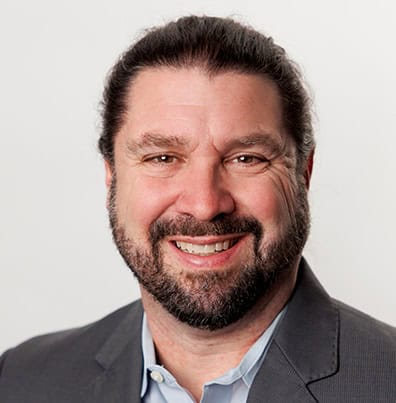
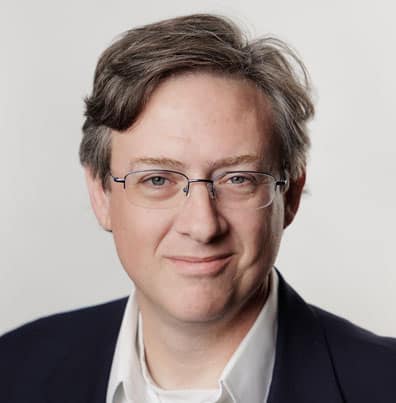
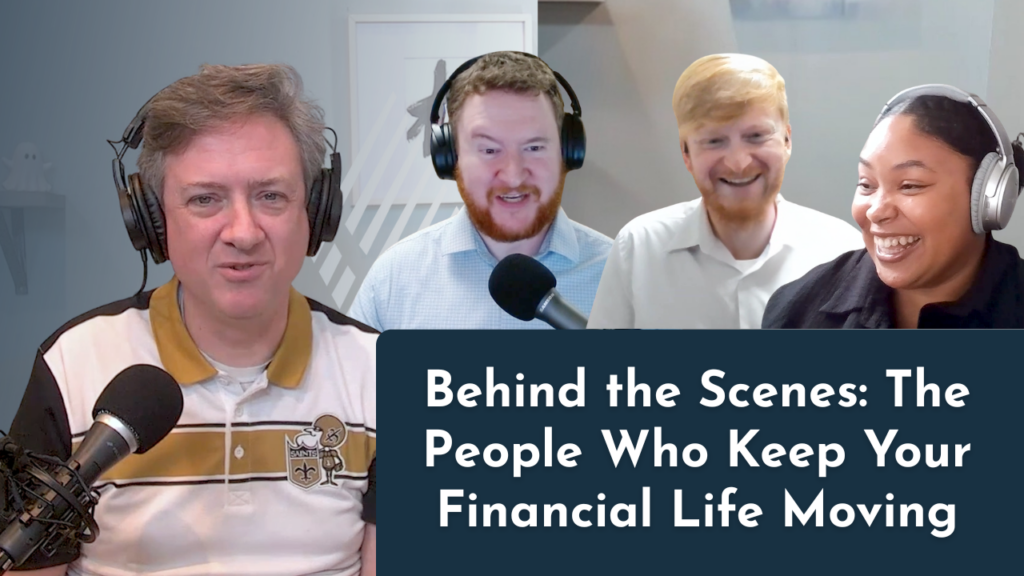
Jude Boudreaux: Hey, welcome everybody. Thanks for joining us for another episode of The Living Beyond the Numbers podcast. I’m your host, Jude Boudreaux, here with our director of positivity, Caleb [00:01:00] Arringdale Hello. And then, uh, got a special guest with us today, one of our partners and senior financial planners from our Alaska office, Mike Branham.
So Mike, welcome.
Michael Branham: Thank you.
Jude Boudreaux: Yeah. Excited to have you on here today. And, um. Yeah, maybe we can start with just kind of share a little bit about how, you know, how do we, people often ask, like, you guys have an office in Alaska. Like, how did, how did that happen? So maybe share a little bit of your journey and how, how we ended up, uh, with you being partners with you and in Alaska.
Michael Branham: Yeah. Um, so I don’t know how far back we want to go. I, I started in financial services, um, about 26 years ago. Um, so 1999 for a major financial services company. Um, stayed there for a couple of years and that led me to kind of switch over to the financial planning. And the only side, and I worked between two firms with the same person, but between two firms for, uh, it was probably close to 15 [00:02:00] years.
Um, and in that time I was in leadership within, uh, the financial planning association and, and met Marty Kurtz and worked closely with him on the FPA board and we developed a relationship. About the time we both dropped off the border, about the time I dropped off the board, he had been off a couple of years.
He called me one day and said, Hey, I have a friend in a study group who has a, a firm in Alaska and she’d like to retire. And it’s really important to her that somebody with some experience in Alaska who’s willing to move there or live there, um, is part of this process. I thought of you and I was really happy with the firm that I, that I was with.
I had no intention of leaving. Um, but I did say I’d sit in on some of those calls and just act as a, act as a guide for Marty. Um. Through about six months of discussions. We talked about what it would look like and what they wanted to accomplish and everything else that was going on. And, and [00:03:00] I, uh, I decided to make the switch.
So Marty bought this firm, or the planning center, bought this firm, um, in Alaska in 2015. I think the deal closed in 2016. I joined the planning center mid 2015, so July of 2015 was my kind of my birth date within the firm. Um, and then for several years, flew back and forth between the Twin Cities and Anchorage.
Um, probably came every. Every six weeks for two weeks and spent time here working with clients and getting to know them and dealing with the transition. Um, with the, the intention was always for us to move here full time. That was the promise that we made. But we had two kids that were still in high school at the time and uprooting their lives and moving them thousands of miles from kind of their social network and the groups that they had formed and the sports and activities that they were involved in didn’t make any sense.
So it was up to me really to, um. To [00:04:00] travel and then come back. And then the, the goal was to move in 2020 after our youngest graduated high school. And of course, as we know, uh, life had different ideas for us at that time with the pandemic, it was a little hard to make that jump. So we waited until summer of 2021 and moved up here full-time.
And we’ve been here since my wife and I. So
Jude Boudreaux: yeah. And if I remember right. That was part of the, the background. Like y’all wasn’t just, oh, one day we’d like to live in Alaska. There was some connection beforehand.
Michael Branham: Yeah. Yeah. So I coming outta high school. I didn’t really know what I wanted to do, but I spent a lot of my life outdoors.
And so I came to the University of Alaska Fairbanks for two and a half years and went to school there. So I had lived in Alaska previously. Um, I had a, a network here and a group of friends here that, uh, that I was really close with. And so there was always that draw, that pull to, um, come back to Alaska.
I visited. Several times and, and always had [00:05:00] that in the back of my mind. That’d be kind of cool to, uh, to live here one day. And Julie, my wife knew that and she was somewhat interested in it, but. We had initially thought about doing that long ago in my career, and then we started, uh, having children and moving that far away from our regular kind of support network was not appealing to either of us.
And so we built our lives and our careers in the Twin Cities where we had both grown up, uh, and as fate would have it or as life intervened, uh, found ourselves back here, uh, you know, close to 20 years later. Anyway, so.
Caleb Arringdale: So you talked about that you really like being outdoors. What sort of things do you do, because I think you have a really fascinating set of hobbies.
Michael Branham: Yeah, I mean, anything outside. So we do a lot of fishing in the summer, as most Alaskans do. Um, we do hunt in the fall as most Alaskans do. We do a lot of hiking in the summer and getting outside a lot of camping. Um, just kind of typical things that your [00:06:00] normal, uh, Alaska resident does. And we did a lot of those things when we lived in Minnesota too.
I, I was pretty extensively visited the boundary waters canoe area in northern Minnesota and we have a. Family cabin in Northern Minnesota as well that I spent pretty much most of my formative years at. We lived there most summers and then, uh, went back to the cities for school in the, in the winter. So I’ve been doing things outside, uh, pretty much all of my life.
It’s where I probably feel most comfortable and where I, uh, enjoy myself the most. And as luck would have it, we all need jobs and to support families and so we can’t just spend all of our times in the woods. But, uh, but here we are.
Caleb Arringdale: Yeah, and I think the big difference between maybe time spent in Alaska and the time spent maybe in the Midwest is, you know, we might go fishing for an afternoon or you know, maybe do a little hike, but you’ll go out for, is it a week long or two week long kind of moose expedition in many years.
Or you’ll do these really extensive sort of trips that I think [00:07:00] round here. That’s just not really something that we frequently are able to do.
Michael Branham: Yeah, I, so our kind of, our moose camp is, uh, somewhere around eight days is what our target is, travel and otherwise, um, you know, we went, we flew to Kodiak Island last year and did a goat hunt and that was cut short by weather, but that was really supposed to be about a week, um, in a, you know, we got dropped off by a bush plane and, and we were the only humans out there in that area for, for the time we were out there.
So. Everything just because of the, the vastness of the state of Alaska. There’s no, like, if I drive, you know, if I drive from here to Fairbanks, that’s six hours. You know, you think about from New Orleans or the Quad Cities where a six hour drive would take you, that’s not even halfway up the state. So there’s a lot of land and a lot of space to cover and just to get where we’re going takes a lot of time and, uh.
And effort. And quite frankly, it’s not always easy. There’s always stuff that goes wrong and things that gotta be [00:08:00] fixed. And uh, you get pretty good at solving problems in the field. So
Jude Boudreaux: away I think that speaks directly to financial planning, you know? So is there, do you find that, like, that time outdoors or this, you know, fact of, well, we’ve gotta plan, but things will happen along the way, like if there are parallels, do you find this comes up in those conversations?
Michael Branham: I think if you draw that analogy or metaphor, whichever we’re speaking of, you know, the, the reality is that life comes at you fast. And we always define financial planning as a process. Like it’s not something we sell, it’s not a thing that we give. It’s a, it’s a process that we undertake with clients. Um, and, and the reason that it’s a process is because life happens fast.
And so whatever our discussions center on today, we know that tomorrow. The world can change that for us, either by things that we do or things that happen outside of our control. So, you know, you think about being outside or you know, from the point we leave our. [00:09:00] Our trucks and drive our, our UTVs into to Moose Camp.
There are obstacles and pitfalls and challenges that we’re gonna have to overcome, um, that we haven’t foreseen. You know, we kind of know, but you just never know. Everything changes day to day. And I think the same is true, uh, in the work that we do with our clients since, you know, with respect to, um, here’s what we think the plan is and then we need to make.
Changes along the way to deal with whatever the world or lives throw at us.
Jude Boudreaux: Oh yeah, absolutely. So let’s talk maybe a little bit then about kind of your work. So, you know, you work with a lot of Gen X professionals, executives. What do you think are some differences you’ve noticed generationally about, you know, how they might perceive financial planning or living the lives they wanna live?
Michael Branham: Yeah, you know, you, it’s, it’s interesting when you work with whether it’s the greatest generation or Gen X, gen Y, um, I, I work with fewer Gen Z individuals, but we have some [00:10:00] generation two or generation three clients that would fit that mold. And the world of possibilities that can be a man imagined just, I think, increases as you move down the generation.
Um. Scope. So, you know, my kids do things now that I could never even have imagined doing in my late teens and early twenties because it’s just become possible for people to do these things. And, and it was probably possible then, but it never really was on my radar as a possibility. So, you know, when we work with.
When we work with retirees, their set of goals and values and what’s important to them is often very different from when we work with generation two and generation three. Um, and, you know, it it, and that’s a natural evolution over time. I think eventually we all move to, to that level of thinking where, you know, sustainability and legacy becomes really important.
Whereas when you’re 22, legacy isn’t even a. A [00:11:00] thought that you have at that point. It’s, it’s how do I live my best life? And for some it’s how do I survive what I’m going through right now with all the chaos? So, um, you know, there are generational differences, but I think it helps, you know, with me working with a lot of Gen X or even some Gen Y people, I’m kind of in that middling range where I am Gen X, but I’m kind of near that Gen y border to some degree.
Um, it helps having shared life experiences. Having done a lot of the same things or, you know, faced the same challenges or the same opportunities in life, and how did we navigate those? And so, um, it just seems to be a natural fit for me with a lot of the folks that, uh, that I’m fortunate enough to, to serve.
Caleb Arringdale: Kind of thinking about that, you obviously have an office, you manage, you’ve served on really some really cool national boards. You’ve also, you know, been a planner, raised a family. How have you managed to balance all of those things? How do you think that’s, [00:12:00] that impacts the way you help others?
Michael Branham: Yeah, I don’t think I was very good at it at first.
Um, I think you learned that along the way, quite frankly. You know, there was a lot of travel and a lot of time away. Um, as a, as a professional, I missed some things. I was still involved a lot in the lives of my kids and in my family. I coached hockey for 20 years. I coached lacrosse with no business doing so.
I coached baseball and soccer over the years. Um, so I was there. For a lot of what my kids were doing, but there were times where I just had other things that I needed to do for job or career or leadership positions. And so there were times missed. And I think, you know, finding that balance and figuring that out takes a lot of time and energy and, and real forethought, or at least intentionality.
Um. And I got better at it over time. So, you know, when I was home with my family, I was with my family, I was able to cut off a lot of the stuff that, uh, like when I leave here, when I leave the [00:13:00] office, I have emails on my phone. But quite frankly, I don’t, I don’t do a lot of financial planning stuff. At home in the evening, that’s my family time.
I’m there with my wife or with whichever kids might be in the house at the time. And when I’m in the office, that’s my office time. That’s where I do the work that I do. So, um, that took a long time. I used to work longer hours and I used to constantly, you know, do the work from home stuff, but now I’ve been able to kind of compartmentalize those things and, and, uh, approach them in a different way.
Jude Boudreaux: Yeah, it definitely sounds like, and I think. For all of us, like kind of like you’re getting on the UTV and heading out to Moose Camp. You have a sense that of what needs to be done, but over time you learn and get better at, at doing those things and navigating those obstacles. I think that’s really, uh, often what it comes down to.
So you talked about being inspired by hardworking, dedicated people, su you know, succeeding from their efforts. And so how do you help people define what that means? Like I’m sure you have that [00:14:00] conversation with families
Michael Branham: For all of us, I think that’s really the first. Responsibility we have in working with clients is to figure out what it is we’re planning for.
Like we can, we can do the numbers part of it, the, the qua, the quantitative part of it. It’s the qualitative part at the beginning and interspersed throughout that I think is really, really important. I use an analogy a lot of times I’m stealing this. Um, a former mentor and boss of mine, John Ton really explained it to me.
Um, but. I often ask people about puzzles, right? I think a lot of people like to do puzzles, and I always say, you know, when you do a puzzle, what’s the first thing that you do, um, before putting it together? And most people say, oh, I get out the edge pieces, or I find the corners right? And I’m, and, and that’s all true.
That’s really technically or mechanically the first thing people do when they put together a puzzle. But the reality is the very first thing you do is you look at the. Picture on the front of the box, because without that context, you really don’t know what it is you’re working toward. And so I think our job and work with clients is to really paint that [00:15:00] picture on the front of the puzzle box early on in that relationship within the first couple of meetings so that we have the context around.
What we’re planning for. And I think a lot of people that we work with have never really thought about what that picture looks like. Like those conversations, whether, and I know Jude, you love the kinder three questions, right? And so using those can really help frame the conversation around, um, what is, what is it that we’re planning?
What is really important to you? Because it’s not another dollar. It’s really what that dollar. Represents or what it could do, the opportunities it might create, the legacy it could create. And so we really need to understand what that is. And, and we do that through kinder. Three questions, the money quotient tools that we have, the conversations that over time we’ve all learned how to lead.
Uh, I think those are the really important conversations with clients. What are
Caleb Arringdale: those kinder three questions just for those who might never have heard of those.
Jude Boudreaux: Well, I’ll, I’ll hop in on that one. ’cause that’s, I, I use those generally with, with new [00:16:00] families. And I’ll put a link in the show notes to the, the full, uh, document of this.
’cause they’re, they’re available on the internet, but in short, it’s basically, if you had enough money for the rest of your life, what would you do? If you had five to 10 years to live, what would you change? And if you had 24 hours to live, what would you miss? It’s a pretty emotionally intense conversation to go into.
The benefit of it is that it gets really clear on what’s important, and the more I think you know about that, the easier it is to make some of the choices that are life values choices, but that have a a dollar sign attached to them. Um, so it’s easy to decide what you prioritize, what you wanna put your money and time towards, and then what are things maybe you don’t want to, you know, spend money and time on if you can.
So, um, so yeah, but all of these are, are aiming to that same point that I think Mike made of let’s, you know. Get a real right. Maybe you so you wanna retire? Well, no, but like in detail, like what does that, let’s get some sharp edges and images around what that really looks like. Uh, ’cause retiring and [00:17:00] playing golf is different from retiring and traveling around Europe or retiring and getting an rv like, or retiring and taking care of your grandkids is a bunch of different ways that that can all work.
But the more we know about what that looks like for you, uh, the better our advice becomes. And then. Life too is going to change that. And so how do you make pivots along the way when you find something else that you wanna pursue?
Michael Branham: I think you summed it up really well.
Jude Boudreaux: Yeah. The, this ties into something else, uh, that I think was important for your bio.
You talked about, you know, keeping the big picture in mind and avoiding focusing on the short term noise. So when you’re working with people, what does that look like? Or how do you find you help them do that?
Michael Branham: It’s becoming increasingly more difficult. There’s so much information flowing these days, and some of it’s reputable and the sources are reputable, and some of the sources are not reputable.
Um, and it, you know, I think clients really, they hear things and they react. And so one of my jobs is to filter through some of that noise with them and, [00:18:00] and really get down to, um, a what’s important to them. What’s the progress and momentum that we’re making towards that? And b, focusing on controlling or acting on what they can control, right?
So if, if you hear all kinds of, you know, noise or news about whether it’s, you know, policy decisions or macroeconomic decisions or you know, what Congress is doing, you have very little control of that. Short of voting, 18 months or 24, or, you know, 48 months from then, right? So. The key is going to be for most clients, okay, what can we do?
What can we control in order to insulate ourselves or best plan for whatever concerns that you might have? And you know, I think you deal with. There’s a lot of stuff going around right now, right? A lot of fear and a lot of un uncertainty for half of the people, and a lot of optimism [00:19:00] and a lot of expectation for another half of the people.
And there’s a wide chasm between those two, um, trains of thought. And so you’ll have clients on both sides of. Of that divide. Um, and you need to be able to kind of navigate and manage expectations or fears on either side with what a client can actually do to prepare for whatever it is they think is gonna happen.
But I think the best advice is ignore it. I always tell people, stop watching it. Like, just, just turn it off.
Jude Boudreaux: I’ll say this ’cause my father-in-law doesn’t watch the podcast, but my mother-in-law does and every time we go there at nine o’clock, he’s gotta go watch the news. I always think, man, your grandkids are all here in the room like this, be here.
Like nothing on the news is gonna make you feel any better about anything. So like, yeah, what are you doing?
Michael Branham: I, I think, I think bonafide news is important. I think being informed is important. I think you really have to pick your sources well, and I’m not [00:20:00] gonna get political. I’m not gonna, ’cause there are both sides that think their sources are bonafide and the reality is very.
Few of them these days appear to be. Um, so, you know, if you are watching or listening to something, I think it’s always good to find the other side and, and juxtapose those two things and probably understand that the truth is somewhere in the middle. And I don’t think enough people do that.
Jude Boudreaux: Absolutely.
Well, we could do a whole podcast on, on that for sure. It’s uh, um, yeah, interesting times for information. But as, I mean, I think this ties into where I wanted to go next, which is, you know. Market volatility is sometimes a response to just what’s happening out there in the world. And ’cause the world will change, uh, your career and life will change is going to be things.
So how do you build work with a family to build like a resilient, you know, plan or mindset while you’re, you know, beyond just having kind of an emergency fund or some cash in the bank for [00:21:00] a rainy day.
Michael Branham: Well, I mean, there is the, the financial part of that, right? To have the emergency fund and to build a portfolio that meets your, uh, kinda your risk profile and your risk acceptance and, and your long-term trajectory and goals, your time horizon.
Um, but, but. Often it’s really keeping the focus on what it, what is it we’re doing in the first place? Like remember those conversations we had when, when we asked the kinder three questions or when we went through the money quotient tools? Um, and what was really important to the two of you, because it wasn’t a dollar amount necessarily.
It was, I wanna have enough to blank, blank, blank or this, that, the other. And so, you know, if you bring it back to and refocus on what the goals are and the momentum and progress being made to those goals, a lot of times we can ease some of that fear or anxiety about, you know, market volatile. We all know that markets are gonna be volatile.
I’ve been [00:22:00] telling people all year. Whatever the markets do. There could be political implications, geo geopolitical implications, financial implications, monetary policy implications that affect that. But the reality is the market is going to cycle regardless. And so we’ve built portfolios and we’ve built an approach that can handle a regular market cycle and it can handle these anomaly events as well.
Um, and here’s why. Here’s where we are on a trajectory towards the goals we talked about and here’s how we got there. And if we continue to do these things, yes, there might be a day where on paper, your portfolio looks like it’s worth less, but that’s probably not the day that we’re going to retire. And even if we do, here are the backup plans we had in place.
Here are the contingency plans we talked about, are built into the plan. So, uh, you know, the planning work that we do is much broader than. What’s your investment result for the year or what’s your average [00:23:00] return over 10 years? It’s, that’s a part of it. There’s no question. And we need to have a portfolio that’s sustainable for a lot of things they need to do.
Um, but there are other aspects to that that, that, uh, we had to build in.
Caleb Arringdale: Yeah. I, I really like working with both of you. Like from my position, I get to work with a lot of the different planners being on the tax team, and you both look at things slightly differently. Like you both have different approaches on how you.
Deal with clients and how you just think about like financial topics and yet you both are always gearing towards that big picture, right? You both from potentially different angles, but you’re both gearing into that exact same area of, Hey, what is the big picture? How yes, markets matter and yeah, we’ll do what we can to maximize that, but what can we actually control?
Jude Boudreaux: It’s one of my favorite things about the firm. I, you know, I really believe, you know, everybody’s got a plan that, you know, is a client here and is having those kinds of conversations knowing that yeah, we’re gonna build a, a plan that gets you towards where you want to [00:24:00] go and that you know life and you are gonna probably wanna make some changes to this.
So we’ll need to understand and meet regularly and keep up with what’s going on so that we can pivot when, when things need to, need to pivot.
Caleb Arringdale: So how has the concept of retirement changed over the last 25 years of your career? I, I think even some of the clients we share together as people have gotten closer to retirement, it’s not just the money issue.
It seems to be a lot of the almost self-identity issue, but, but what have you observed?
Michael Branham: Yeah. You know, I think even before Jude in my time, retirement was a notion that you worked to a certain age and you stopped working and there was some kind of pension or some kind of income stream there, and you lived as long as you were gonna live, and that was your life.
And, and the, just the options or the imagination for what retirement could look like, or even the name retirement or the, the, you know, the, the. The idea of retirement has changed. I have so many more clients [00:25:00] now who it’s more of a transition in lifestyle, right? So it’s from going to an office every day to, yeah, I’m gonna work a little bit, or I’m gonna spend my time volunteering, um, and I’m gonna do the things that are important to me.
And so that’s what the plan has to encompass. And, and so, and I think what we’re seeing with, um. With a lot of the, kind of the younger, I’ll call it, ’cause I’m 51 years old, so everything’s feels younger to me these days. With some of the younger movements, whether it’s the fire movement or just, you know, regular Gen Z or Gen A, um, people like my kids, um, they kind of live half a retirement, half a working lifestyle now.
Like their ability to monetize or make work. Some of the things that that. A didn’t exist when I was that age, but B would never have even imagine. I don’t have a good enough imagination to do what some of these people are doing these days, monetizing things like social media or you know, [00:26:00] working very hard for a period of time and then taking a hiatus and traveling or a lot of these really cool things that are doing.
They’re kind of building the notion of what retirement was for people into their everyday lives today. And so there’s that kind of constant, we’ll call it balance because it’s a buzzword, but there’s that constant balance between work life and recreational life or. Or just life, if you wanna put it that way.
So, you know, the concept of retirement was an end point and a shift, and now it’s more of a transition or just a change in lifestyle, uh, with a lot of people that never really give up working or never give up what they were passionate about and find a way to do that and sometimes even monetize it. Um, but I think that’s very different over the last 20 years than it was maybe when I first started.
Caleb Arringdale: I heard a comedian who said that. Really any conversation you’re having, anything anyone’s saying, you can just chime in and say, it’s really all about [00:27:00] balance and it’ll probably make sense and it’ll probably appropriate because balance is really, it’s, it’s really the name of the game and that’s fascinating to observe that even in the financial planning and retirement field.
Jude Boudreaux: Oh, I love that. It’s in the tagline too for the firm. You know, that we, we just talk about wealth life balance because it, it is, uh, you know, what’s the money for, it’s for the life things you wanna do. And so how do we balance making sure you got what you want and, uh, can pay for the things you need and do all this other great stuff with your life.
And
Michael Branham: retirement’s a tricky thing. I mean, we all see it with clients. They, they don’t quite know what to expect. Like if it is that milestone, if it’s, if it’s a sudden switch from work to not work, that takes time. That’s not a, you’re not immediately like, yeah, I love this because you have to figure out how you’re gonna spend your time.
You know what’s important to you. There’s the mechanics of it that a lot of people don’t understand, like, where does the income come from? Well, it’s not gonna be very different from your regular paycheck. It’s just gonna come from a [00:28:00] different source. Whatever your savings are, right. You know, we have funny conversations with spouses all the time.
Like I hear and have heard for the bulk of my career. There are a lot of people that come in and say, I’m so busy in retirement. I don’t know how I ever found the time to work. And then there are clients who say, you know, jokingly and lovingly say, my spouse is around so much now it’s driving me crazy. We need to find something for them to do.
And so, you know, everybody handles it a little bit differently. Um, but it’s all real. And that’s part of, that’s why our work, that kind of iterative ongoing planning process doesn’t end on retirement day. ’cause there’s still a lot of life to happen and maybe the conversation shift. To something slightly different, to making sure they maintain that security that we believe they have going forward and legacy.
Um, but the, the planning work and the emotional aspect of [00:29:00] the work we do, um, never stops.
Jude Boudreaux: I think it’s so keen and critical. And Caleb and I had a conversation yesterday with a client who is a surgeon and now is retired. Uh, and so one day you’re healer and now you’re, you know. Person at, you know, dealing with your kids and, and what’s going on in their lives.
So it’s a pretty different, um, day to day life for that person. And you gotta, you know, figure out and make some meaning for that. And I always like to bring up Michelle, one of Michelle’s clients had said, uh, no, I married you for better or for worse, but not for lunch. Uh, ’cause sometimes there’s a lot of closeness that comes after not being around all day every day.
And, um, yeah. I already know with my wife, like that’s, she’s like, don’t you have something to do? Like, you know, you’ve been here an awful lot. I could use some alone time. So
Michael Branham: yeah, Julie. Julie still thinks she wants me around in retirement all the time, but I think that might change. We’ll have to see. Not an easy person to have next to you all the time.
So.
Caleb Arringdale: Can you talk a little bit more about that [00:30:00] transition into retirement? I know when we talked with Michelle, we talked about how we deal with transitions in general and what that, what that process looks like. But in your experience, how, how are clients handling that transition? What, what is, what does the two years leading up to retirement look like for them?
Both monetarily, but also just emotionally?
Michael Branham: I think it’s a scary time or at least a time of uncertainty, and so they really need a lot of conversation around, you know, probably some reaffirmation that the work that they’ve done. Up until that point is, is what we thought it was, or we are where we thought we would be.
And if we’re not, we need to make a little bit of adjustment. Right. And so you talk about things like the emotional aspect of it, some of the things we just mentioned, like how are you gonna fill your time that matters. And maybe you’re not gonna figure it out until you get there, but you need to start thinking about it.
So kind of the qualitative conversations that we have. And then on the quantitative side, they really do wanna know, okay, where is the income going to come from? [00:31:00] What does Caleb say about the tax impact of that? Can we control certain things? What are the opportunities we’re gonna have? What are the challenges we’re gonna face?
Um, you know, there are, there are clients that start thinking about, well, I don’t really wanna stop working, but what does my work look like? I’m gonna stop working for somebody else. What can I do with my skillset and my, you know, unique abilities to, um, do a little bit to, to monetize what I’ve built from a career standpoint over the years, you know, into retirement.
You know, people like my, you know, my dad is 75 years old. Um, he’s gonna retire again at the end of the year, maybe permanently now, but, but we never know, right? Like, it just, people need to feel like there’s something to do and everybody has a different answer. For what that looks like. Um. Then I think from a conversational or, you know, a, a, a, a couple dynamic, um, it really does come down to there’s [00:32:00] a lot more conversations in retirement or leading into retirement about legacy.
Like everybody says, I wanna spend my last dollar on my last day at some point in their life. And I always tell ’em, it’s really hard. That put, that puts a lot of pressure on me. I don’t know how to make that happen. So you’re either gonna have. Some left, or you’re gonna, you know, you’re gonna spend it all before and I don’t want to go into that latter situation.
So what does that legacy look like? Whether it’s to charity or to family, um, to friends, um, you know, what’s really important about that size wise or structurally, or. And then we talk about, well, if we think about legacy, would you rather start initiating that legacy while you’re, while you’re alive? Would you rather see the impact that the fruits of your labor have on the next generation or on charities?
Um, or would you rather wait until you know you’re gone and give it all at once? And so the, the conversation shift a little bit from are we on track to having a [00:33:00] number? To how do we take that number and sustain and utilize it in a way that fulfills all of our goals that we’ve been talking about for years.
Perfect.
Jude Boudreaux: I mean, I guess maybe one last question and we’ll do some rapid fires, but um, you know, like how do you think that your definition of success has evolved as you’ve worked over your career and what do you think about your retirement years? We’ve been talking about retirement a lot, so what do you think that looks like?
Michael Branham: That’s evolving. Julie and I talk about that from time to time. We, we don’t quite know permanently where we’d live yet. You know, we have two children that still, they’re not children anymore, they’re adults. But we have two kids that live in Minnesota. Our, our grand baby who was born a little over a year ago lives in Minnesota.
You might imagine that’s tough for a grandma not to be around at all times. So that’ll have an impact. Um, we’ve talked about maybe being, um. A little bit nomadic early on in our retirement, there are places we would love to visit [00:34:00] more deeply than we can on just a regular vacation. So maybe we wanna live a, you know, a month in.
Ireland, or maybe we wanna live a month in Costa Rica, or maybe we wanna live a month wherever, um, or even domestic locations and try places out. And so that might mean not having a, a quote unquote home base for some period of time, and then figuring out what that looks like going forward. Um, so we’ve gotta keep it open for all of the, and quite frankly, I’ll do whatever she she’d like to do.
We just gotta make sure that we, you know, think through the mechanics of that when we get there. With respect to my definition of success. I’ve been really fortunate, um, over my career to have done some pretty cool things. Um, both Jude and I are past presidents of NextGen, which is a group of young planners with FPA.
Uh, I sat on the FPA board and on its executive committee. Um, I’ve traveled all over the country and to some, a few spots around [00:35:00] the world speaking to other financial planners just based on my, my leadership opportunities. And what I found is the, the biggest reason for those opportunities for me is because I surrounded myself with the right people.
And when they asked, I responded. Yeah, I just think I’ve been fortunate and a lot of those people are still kind of in my inner circle today, and I’m really thankful and grateful to have them there because they meant a lot to me over my career. I think when I, when I first started out, success meant. Some income or dollar amount, and now I think it means impact.
And I don’t know that I’ve, I, I’m not gauging what impact I’ve had or haven’t had anywhere, but for me that would be. Probably more successful than if I made, you know, um, if, if Caleb wants to gimme a billion dollars, I’ll take it. But, but what’s more important [00:36:00] is that, you know, we have shaped the financial planning profession.
People like Jude and those that we’ve had the, the pleasure of serving with, um, for the better and left it better than we found it. And I think that’s, uh, for me that that’s pretty important when I look back at my career.
Jude Boudreaux: That’s a perfect place for us to transition into some lighter questions. So, um, yeah.
So Mike, if you had to tell us what’s your favorite animal, what are you going with?
Michael Branham: Ooh, well, I would choose Penguin, but I know that that’s already chosen. Yeah, I’m just kidding. That’s mine. Um, yeah, I don’t know. I always liked wolves as a kid. Um, they’re kind of controversial, but I’ve always been a big fan of the wolf.
Um, the, the group dynamics of wolves and kinda how they. They approach life and survival. Uh, I hadn’t given that question any thought, but that’s the first thing that comes to mind. So I’ll go with that. Every person who works at
Caleb Arringdale: TPC or even those who do not work here, [00:37:00] every person was above six, four, chooses the bear.
And I thought you’d being in Alaska, you might choose a bear as well, but a wolf. That’s pretty cool. I like it.
Michael Branham: Yeah. I had a bear in mind too, but I chose the wolf and I’m not above six four. Well, there we go. I’m the short guy at TPC. Yeah.
Jude Boudreaux: Well, how about, uh, what do you think is the best money you’ve ever spent?
Michael Branham: Any good money I’ve spent has been on experiences or something that allowed for experiences. I’ll tell you, you know, unfortunately, both of my wive’s parents have passed and when her dad passed, he left my kids a little bit of money. Not a ton of money, but, but more money than they’ve ever seen in their life.
And so the one thing we told them is. You know, this money is really intended for education, but will allow you to use it differently. If you spend it on experiences. You can’t buy stuff. You’re not gonna go buy, you know, whatever material things you think are important right now because we just, we don’t.
Think that you need that. And my daughter really [00:38:00] jumped on that and she has traveled around the world for now. Not on that initial amount of money, it wasn’t that much, but it planted the seed in her of travel and experience that she has really taken to, um. And I think I am the same way, so I don’t have a specific answer for you, but it would’ve been spending money to put yourself in a place or give yourself an opportunity to go out and try something new or experience something you’ve never tried before in places you may never would otherwise have gone.
Uh, and do that with the people that, that are important to be with in those places.
Jude Boudreaux: So, really cool. So, um, what about the best advice you’ve ever received?
Michael Branham: I don’t know that I followed it. Very often. Um, but it goes along the lines of, you know, the conversation we had about blocking out the noise and that was, you know, don’t sweat the small stuff there.
That is, that is a [00:39:00] hard learned skill for me. Like Jude, you’ve known me a long time. Um. I am, I’m very different today at 51 than I want, than I was at 26. I, I think, and I hope that we all are, um, but also probably more laid back these days than maybe I’ve ever been. I’ve, I’ve traditionally been a pretty type A person, um, and pretty driven, and I’ve been able to kinda step back from putting that kind of pressure on myself and being that level of.
Of crazy, if you will. Uh, and so a lot of that is because I’ve been able to take some of those small things except, and my wife will tell you this, when I drive, all that goes out the window. I still get frustrated with people. I, I don’t understand where people learn some of the things that they learn, and that’s probably me, but I’ll put it on them.
But for the most part, I’m pretty laid back and I’m able, able to, to put aside the small stuff and not, not let that get to me and worry about it too much.
Jude Boudreaux: I would’ve said there’s, uh, was an [00:40:00] intensity about you that’s not gone. But I think it’s different now than it was probably earlier on.
Michael Branham: Yeah, yeah.
Self-reflection iss a powerful thing. And you know, my leadership opportunities really change the way that I think about things, how I communicate things, and how I frame things to other others. Um. So you, I’ve been able to take that into both practice and life, you know, profession and professional and personal lives.
Uh, and I think that’s, it’s been a good, been a good shift and a good change for me. Excellent.
Caleb Arringdale: Yeah, just one more. It’s always my favorite one. If you had to go buy some happiness, what would you buy? How much would it cost?
Michael Branham: I’d buy a plane ticket. I don’t know where yet. Probably somewhere pretty cool, uh, probably for Julie and I to go, whether, uh, we really wanna go to Scandinavia.
We’ve not been yet, so maybe we would go to, uh, like Lapland, um, or kind of Northern Sweden or Norway or Finland and, and check things out in the winter. [00:41:00] Um, Icelands high on our lists. There’s a theme here. It’s all outdoor places. And then if you ask my wife, we’re gonna go to the Pharaoh Islands and Shetland and parts of the, of the UK because there’s a lot of sheep there and she loves things all, all wool related things, whether it’s knitting or spinning.
So those are on the list as well. So, uh, happy wife, happy life. I’d probably spend money on traveling to those places.
Jude Boudreaux: Nice. Yeah, I knew she was into like knitting and things, so I didn’t realize that it was like down to the source. That’s pretty full.
Michael Branham: Yep. Absolutely.
Jude Boudreaux: Fantastic. Great. Well, uh, any closing thoughts, Mike?
Anything you wanted to say that didn’t come up today?
Michael Branham: No, I just really appreciate you guys doing this. I think you guys are doing a great job and the, the episodes so far have been, uh, incredibly interesting and I look forward to hearing many more. So thank you both for your efforts on this and all the work you’re doing and the folks behind the scenes that are doing the work as well.
Jude Boudreaux: Yeah, thanks. It’s been really rewarding to be able to be a part of these and to hear from folks like you. But everybody know more about, [00:42:00] uh, the great people we’ve got on the team, so. So thanks for that, Mike. Alright, well, um, yeah, and so thank all of you for listening to another episode of The Living Beyond the Numbers podcast.
Please like, comment, subscribe. We’d love to hear from you. Uh, I’m jude@theplanningcenter.com. You can reach Caleb at caleb@theplanningcenter.com and Mike is. Unsurprisingly mike@theplanningcenter.com as well. Um, so thanks so much. Please join us for another episode, and we look forward to hearing from you soon.
Voiceover: Thanks for tuning in to the Living Beyond the Numbers podcast. If today’s episode resonated with you, be sure to follow us so you never miss a conversation. For more resources and to learn how we can help you align your wealth with your life’s purpose, visit us@theplanningcenter.com or give us a call at (888) 333-6986.
The information covered and posted represents the views and opinions of the guest and does not necessarily represent the views or opinions of [00:43:00] the planning center. The content has been made available for informational and educational purposes only. The content is not intended to be a substitute or professional investing advice.
Always seek the advice of your financial advisor or other qualified financial service provider with any questions you may have regarding your investment planning. Investing involves the risk of loss. The information presented on this program is believed to be factual and up to date, but we do not guarantee its accuracy, and it should not be regarded as a complete analysis of the subjects discussed.
Discussions and answers to questions do not involve the rendering of personalized investment advice, but are limited to the dissemination of general information. A professional advisor should be consulted before implementing any of the options presented.