[00:00:00] Voiceover: Every number on a balance sheet tells a story, late nights spent building something meaningful, the risks taken, the difficult conversations, the lessons learned along the way. But true wealth is not measured in dollars. It’s woven into the stories that we create, the experiences that shape us, and the memories that outlive us.
[00:00:21] Voiceover: Welcome to the Living Beyond the Numbers Podcast with Jude Boudreaux from the Planning Center. This show is not about spreadsheets and financial jargon. It’s about real conversations and powerful stories that help you align your money with your values, your dreams, and your legacy. Because at the end of the day, it’s not about how much you have, it’s about the life you want to live and the stories you leave behind Now onto the show.
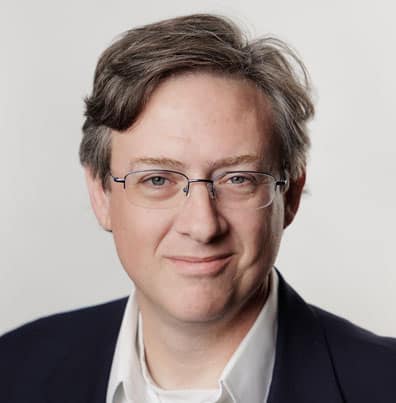
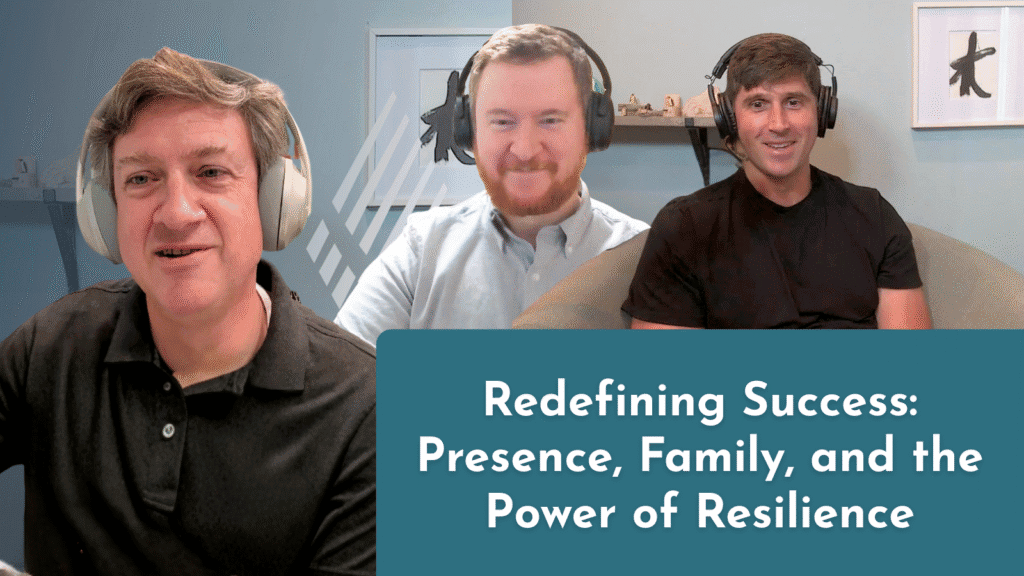
[00:00:50] Jude Boudreaux: Hey everybody. Welcome to another episode of The Living Beyond the Numbers podcast. So I’m your host, Jude Boudreaux. I’m here with Caleb Arringdale, our director of Positivity. Hello.
[00:01:00] And today we’ve got a special guest who’s the CFO of the Planning Center and one of our partners, uh, within the firm here.
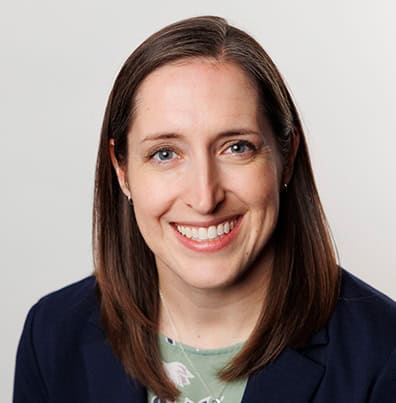
[00:01:07] Jude Boudreaux: So Amy Tesser. Welcome Amy. Really excited to have you on the podcast.
[00:01:11] Amy Tessmer: Yeah, thanks Jude. Glad to be here.
[00:01:13] Jude Boudreaux: Yeah, no, we’re, um, thanks for hopping in, in short notice. I know this was, uh, kind of move some things around on the calendar, but, um, been really looking forward to having you on to share your perspective because I think it’s such a unique one within the firm.
[00:01:26] Jude Boudreaux: So, as we begin, can you just maybe tell me a little bit about how, like, tell us about your background and how you came to be part of the planning center. What’s led you to this pathway here?
[00:01:36] Amy Tessmer: Yeah. I would say that being a CFO of of. Professional services firm was not really something that I dreamed of initially.
[00:01:44] Amy Tessmer: So it’s been, uh, an interesting journey to get here. But I spent the first decade of my career in public accounting and I worked, uh, in the CCPA firm world. Worked my way up from an audit associate up to an audit manager and I, I found that really interesting ’cause companies would [00:02:00] hire us to come in and review and test their financial records we’re ultimately expressing an opinion on whether their financial statements were materially correct.
[00:02:08] Amy Tessmer: And I loved the detail oriented work. I loved getting to work on that really defined project and you know, it really fit my skillset very well. I also got to learn a lot about how different companies operate and how to lead and manage a team. And so it was a really instrumental part of my career. Uh, there was a point in my career though, in 2018 when I was looking back and just realized that what led me up to this point.
[00:02:31] Amy Tessmer: I wasn’t really interested in continuing down, so knew that I didn’t wanna continue at the CPA firm and become a partner, which would’ve been my next step and wasn’t quite sure, you know, what that would look like, but knew at some point I was gonna take a different route. Around the same time I was presented with the opportunity at the planning center and kind of heard more about what the planning center was doing, who they were, you know, their, their reputation in the industry.
[00:02:57] Amy Tessmer: And it felt like a really big risk to take ’cause it was [00:03:00] something uncomfortable, something that I hadn’t done before. But I’d really stepped into the opportunity just to interview for the position to get to know some of the people at the planning center. And it was a fairly long process, um, to get here from when I first learned about the role to when I started, it was almost a year, so really well thought out.
[00:03:17] Amy Tessmer: And it was just something that. I jumped from something I felt like I was good at and could do well into something that was completely new. So pretty intimidating at first. Uh, wasn’t really sure if I could do it or if I had what it took to be a CFO at a small company that’s grown into a larger company and continues to grow.
[00:03:35] Amy Tessmer: And part of the hesitancy that I really had was around the work-life balance piece of it. So you don’t see a lot of people in roles, uh, in companies that are, you know, in the C-suite. That have great work life balance or that have set aside good boundaries, uh, for what their life, they want their life to look like.
[00:03:51] Amy Tessmer: And so I wanted to make sure that I could continue to be a good wife and mother and community member and be involved in things around the [00:04:00] community and found really great joy and being able to positively impact the future of the company while also being able to be present in the lives that, uh, I’m in every day.
[00:04:09] Amy Tessmer: So, and what’s important to me outside of the planning center.
[00:04:13] Caleb Arringdale: I think Amy, we have vaguely similar backgrounds in the fact that we both kind of started in the CPA firm world. I went more tax, you went more audit. But like, I think, I mean, I, I have a little bit of that audit, audit experience as well. For you, what was it like leaving that defined world of moving into the complete unknown?
[00:04:32] Caleb Arringdale: How did, how, how did that feel?
[00:04:34] Amy Tessmer: Yeah, so it’s kind of funny. When I was in, I’m gonna go back to when I was in high school. When I was in high school, I was deciding between. Mathematics and accounting. Both felt really black and white in my mind, and, and I continued that into college, kind of deciding between those two paths.
[00:04:49] Amy Tessmer: And the more I get into my career, the more gray there is. And so. I, I didn’t realize how much in the audit world it was a defined project. You picked it [00:05:00] up, you completed it, it was com, it was finished, you moved on to the next thing. It doesn’t really work that way in, in a business or even an entrepreneurial business.
[00:05:08] Amy Tessmer: So I would definitely say that I’ve learned a lot along the way and grown and stretched myself in ways that I hadn’t in that prior career experience.
[00:05:18] Jude Boudreaux: I, I think for the firm, like this idea of growing, you know, we invest in coaching for everybody has access to a coach. We, um, do so many things internally to try to help people grow.
[00:05:29] Jude Boudreaux: And I don’t know, it’s been really heartwarming for me. Like, I feel like I’ve had a lot of growth in my working with you because we naturally come at things from kind of a different perspective and it’s been really amazing to see the growth that you have had too. And I wonder if you might share a little bit about like that and even like the, the women’s initiative that, that, you know, we, you do where you host those conversations within the firm.
[00:05:54] Amy Tessmer: Yeah, so it’s interesting, this role, a big part of it is still working with numbers and reporting [00:06:00] the company’s financial picture and helping us make good decisions about the future of the company. But it’s so much broader than that. And there’s so much of my role that is soft skill focused and, and even HR focused, um, and wearing a lot of different hats.
[00:06:15] Amy Tessmer: And so, you know, one thing that has kind of just come over time is the opportunity to really impact the lives of other employees. And, uh, I’m not, you know, I, I wouldn’t say I’m great at it. I’m, I’m learning and I’m growing in it, but there’s an opportunity here just to continue to. You know, provide an example for other women in this industry.
[00:06:35] Amy Tessmer: So the, as we know, it’s a male dominated industry, our, our company leadership is, is currently fair, fairly male heavy. And, you know, one quote that really inspired me is I’ve wrestled with what is my place here and how do I, how do I even step into that room, is just to be what she can see. So, you know, it’s easier to see something and go for it because you can see an example ahead of you, but.
[00:06:59] Amy Tessmer: What [00:07:00] is it like to, to be the one that has to be the example for others, and not always the greatest example, but I’ve kind of tried to embrace that, especially over the last couple years. And how can I encourage, you know, other people in the firm or in the industry. You know, it’s a gift that I’ve been given, but it’s also something that allows or challenges me to step out of, you know, what I’m doing and try to influence others as well.
[00:07:23] Jude Boudreaux: Yeah. Well I think it’s super important that, that you’ve done that. And I often think when I’m. You know, we’re, we’re working with younger planners or we’re teaching them. Uh, something I often come back to is like the, the place from inside yourself that you ask the question is more important than the question that you ask.
[00:07:39] Jude Boudreaux: And I bring that up because I think that’s, uh, no matter what you say or however you might feel like you say it, I always know that like the place from inside of you that comes from is like a really great place. And so, uh, so that I know comes across to everybody and it makes a really big difference within the firm as.
[00:07:57] Jude Boudreaux: You know, as you were part of its leadership and [00:08:00] you know, setting that example, showing the way for many others. So yeah, I think that’s really great.
[00:08:05] Caleb Arringdale: And I think you are really our firm’s first. CFO. How did you define that role? Because we’ve been talking with other people and like the, the, the C-suite of our little company, and they’ve all said like, when Eric came in, he did what Eric’s do when Mercer, he had to create the role as well.
[00:08:21] Caleb Arringdale: How did you create this role?
[00:08:24] Amy Tessmer: Well, I created it with a lot of help from others, but, um, yeah, when I started at the planning center, uh, we had someone who was working in the CFO space, but not full-time. It was, it was part of her role, uh, as she continued to transition more into tax and then into retirement.
[00:08:40] Amy Tessmer: And so, um, the way the role has grown and, and gotten defined now looks a lot different than when I started, and I think it’s taken some time just to learn what does the company need and. How do I continue to build and grow in those areas? And I think one area of my role that I really wasn’t [00:09:00] anticipating is the HR aspects of it.
[00:09:01] Amy Tessmer: So I, I thought I was coming into, uh, you know, prepare financial statements and to report on how the company was doing and do things that were all in my wheelhouse. That translated over very well from auditing companies and company financial statements. And, you know, the more I’ve leaned into. How can I be that source of information for our employees and positively impact their lives and, you know, kind of fill that HR seat a little bit more, the more rewarding it’s been, but also the more challenging it’s been.
[00:09:32] Jude Boudreaux: Yeah. Yes, it’s, uh, always both sides of that stick. I think it’s, uh, when we pick it up, it’s always gotta gonna have the, the growth and the, the benefits that come from it. So, I mean, you talked to, I think, really at the beginning about this work-life balance that you wanted to be able to have that and maybe a, you know, partnership in a, in a traditional accounting firm doesn’t provide those same windows.
[00:09:54] Jude Boudreaux: So how do you, you know, there’s systems or ways that you’ve tried to build into [00:10:00] your work here, uh, that balance that you wanted to see.
[00:10:03] Amy Tessmer: Yeah, I think there’s, uh, some things I’ve learned over time and, um, trying to better define. Block time on my calendar of, of work time and personal time and trying to keep and set the boundaries that I, you know, set and keep the boundaries that I’ve set.
[00:10:20] Amy Tessmer: Um, I think, you know, it’s, it’s been, especially since COVID in today’s world, there’s so much integration between work and life and a lot of give and take happening in, in different families and everybody’s, you know, kind of work situation. So just trying to coordinate and communicate all of that between your coworkers and your family members.
[00:10:40] Amy Tessmer: All the people that help make it run smoothly, that can be a challenge. But I think I’m really grateful for the support system I have, the, the balance that I have to kind of define what works for both parties. I do feel like at TPC it makes it easier to define those boundaries because we have set the expectation that family is [00:11:00] important.
[00:11:00] Amy Tessmer: It, it can come first in your life. So I can be more comfortable. Leaving in the afternoon to go to a kid’s activity or picking my kids up from school knowing that I can still be responsible for my role and, um, have the balance that is important for my family.
[00:11:15] Caleb Arringdale: I, I think it’s really cool that you’ve been able to like work a flex schedule for several years.
[00:11:22] Caleb Arringdale: Could you briefly explain what that is and, and how TPC is works with that?
[00:11:27] Amy Tessmer: Yeah, sure. It’s definitely not something I take for granted. Not something that is fairly common within our working world, but, uh, when I had my first child, I was working in Wisconsin at a CPA firm and they had a program, um, that was really well defined of a flex work arrangement where you could kind of define, you know, what percentage of full-time would you like to be and how will you arrange the hours?
[00:11:50] Amy Tessmer: What are the milestones or things you need to do to make sure that you don’t hold up the team and your work’s getting done. And so, uh, I felt like that was something that I wanted to try out, and I [00:12:00] tried that out back in 2011 and have done that since then. So I’ve, I’ve been working a 75 to 80% schedule for the last 13 years.
[00:12:10] Amy Tessmer: There’s times when it’s worked really well. There’s also times when it hasn’t worked really well, but just having a supportive community, both at work and at home has made it possible for me to continue that. And I know that’s not something that’s available to everyone and super grateful that it still continues to work.
[00:12:26] Caleb Arringdale: And, and somehow Amy managed to be like more productive in that time, and I think about anyone else. So it’s, it’s [00:12:32] impressive.
[00:12:32] Amy Tessmer: I think that’s very true when you’re forced to fit your work into a really condensed or defined time. You find ways to become more efficient and more focused, um, than if I was working full-time hours.
[00:12:44] Amy Tessmer: So, yes, that’s very true.
[00:12:46] Jude Boudreaux: Yeah. So, alright. So Amy, so with being, you know, CFO, like with this big role within the company, and you shared a little bit about, uh, early on thinking about math, you know, and, uh, then accounting and [00:13:00] where did you wanna be? Uh, so how has the relationship with numbers, like, how has that evolved for you over the course of your career?
[00:13:07] Amy Tessmer: Um, I would say that, uh, you know, more in the CPA firm world side of things, numbers were a tool. There were something that we used in defined ways to, you know, determine whether they were materially correct or not. More at the planning center, in the role that I’m sitting in now, numbers are a tool and there’s analysis that happens, but then it’s more about communicating the story behind the numbers.
[00:13:31] Amy Tessmer: So how do you look at the numbers? And then have a level of influence and impact on, you know, the others that are helping make the decisions to be able to say, this is what I’m seeing from, you know, this analysis or this is what I feel is important for us to look out for the future of the company.
[00:13:50] Jude Boudreaux: Yeah.
[00:13:50] Jude Boudreaux: Well, and your job, uh, I think is really, you know, help us strike that critical balance because, you know, we are, um, you know, within our [00:14:00] vision for the company, you know, it’s the idea that 50 years from now that. I’ll be another generation of a planner and team and another generation of a client within the family, but kind of talking about the same values and the same ideas that, you know, that are important to that family.
[00:14:16] Jude Boudreaux: And could you maybe share a little bit about how your role bridges those generations? To some degree for us within the firm, between, you know, founding partners who have sold their shares and you know, those of us who are, you know, still have a ways to go in our career and maybe repurchasing shares still. [00:14:33]
[00:14:33] Amy Tessmer: Yeah, it’s given us just going through the different, uh, succession planning that we have in the last, I guess, five years. It’s given us a, a great perspective to be able to see the here and now of here’s the things we need to focus on this year. These are important things that we should budget for and spend money on, but also how do we make this sustainable for the future, and how do we continue to set goals and even just boundaries around how we’re spending money, how we’re thinking about decisions that we’re making, [00:15:00] how we’re.
[00:15:00] Amy Tessmer: Prioritizing hiring so that it’s not just a let’s do this all in one year and burn out, but how do we make this extend for the future of the business going on for generations? And so, um, we’ve gotten so much more aligned on all of that, just going through transitioning ownership and transitioning shares and, and helping that process go smoothly.
[00:15:22] Amy Tessmer: So it works for the partners that have retired. It works for the partners that are buying additional shares. It works for the new partners to the firm. So. I’m really proud of the way that we’ve worked through that and, uh, the succession planning work that’s gone into that over the last five years.
[00:15:36] Caleb Arringdale: When I recently bought shares, there was a discussion of why do you feel comfortable buying shares in a company that are, you know, not inexpensive?
[00:15:44] Caleb Arringdale: And if the frequent response was, well, if Amy’s confident enough to do it, it must be good enough for me. So I I, I think we could second that.
[00:15:52] Jude Boudreaux: But you know, te mean, I’ve also said the same thing when. I was buying things like, I feel like financially it’s a good deal, but my relationship with money is very different.
[00:15:59] Jude Boudreaux: [00:16:00] Like, it’s just a, like, you know, it’s kind of a, it’ll be fine no matter what it is. Like we’ll work it out. And so I was like, wow, if Amy’s been through the numbers and she’s confident to become a partner here too, this must be really good. So, uh, I wonder like, one, how that feels for you, but two, like is there extra pressure with.
[00:16:17] Jude Boudreaux: Having, you know, being perceived that way.
[00:16:20] Amy Tessmer: Yeah. I think the first two time or two that I heard someone say, oh yeah, I’m comfortable with this. It was pretty intimidating and, and scary. I’m like, oh, there’s a lot riding on my shoulders to make sure that this works. And, but I, I, I felt confident and comfortable because.
[00:16:37] Amy Tessmer: We’ve taken that concept and, and our processes for planning and projecting and forecasting and making decisions around the future of the company and, and the financial aspects. We’ve taken that and replicated it year after year. So not that there won’t be unexpected things that will come in the future, but I do feel like we have the ability to adapt to those and have a team around us that is going to be able to [00:17:00] continue to weather the storms that come in the future.
[00:17:02] Amy Tessmer: So I was comfortable. Becoming a partner in the firm, uh, purchasing shares. However, my level of risk is different than Jude’s or someone else’s. So I might own quite a few less shares, and I’m okay with that, you know, so it’s just kind of one of those things where there’s a personal risk aspect of it and a personal, uh, behavioral piece also interacting with, you know, your level of trust in comp and the company leadership and the company’s, uh, position and, and where we’re going.
[00:17:30] Jude Boudreaux: Yeah, that’s, um, I think it’s so well said. Clients occasionally bring up to us the idea of investing in small businesses or having an opportunity to invest in something a, a friend is doing. And my general advice is like, you know, to really buying is like the team more than anything else. You’re buying the team’s ability to deliver results and execute on what the company says it’s going to do.
[00:17:51] Jude Boudreaux: And I feel like, you know, that’s with, for us, when I look around, like the team is so great. Like, I like what I do, I think I’m pretty good at it and I know the people around [00:18:00] me are really great at what they do. So it. It helps feel, uh, a little different when you’re stepping into that, uh, that thing. ’cause it is, we are buying the team that we’re all in this together.
[00:18:10] Jude Boudreaux: Not, not just buying an idea.
[00:18:13] Amy Tessmer: Yeah, that’s right. And I don’t think if it was just one or two or three people on the team that it would just generate that level of comfort. It’s the collective effort that really brings that level of trust and comfort in the future of what we’re building together.
[00:18:26] Jude Boudreaux: So, you know, so obviously you’re, you know.
[00:18:29] Jude Boudreaux: Achieve a level of success in your career with building things over time and the people that we work with tend to be pretty financially successful as well. So I wonder, you know, what advice you might have for people who are, who have, you know, feeling financially successful, but maybe, you know, a little unfulfilled.
[00:18:46] Jude Boudreaux: Like is there a step that you’d recommend they take to start aligning those two? Those two parts of themselves.
[00:18:52] Amy Tessmer: Yeah. I think it’s really hard sometimes because the messages that our culture is sending us don’t always align with who we are as [00:19:00] individuals or what should really be important to us as individuals.
[00:19:02] Amy Tessmer: And so I think it’s really easy to get caught up in working towards that next goal or climbing the career ladder and really losing sight of what’s the purpose behind it? Why am I doing it? You know, you need to step back and, and really challenge, uh, what’s my motivation behind this? Why do I want this?
[00:19:19] Amy Tessmer: And so. I think you can find meaning in any type of work, any role that you’re doing, whether that’s doing the dishes after dinner or sitting on the board of a, a Fortune 500 company. Um, but I would just encourage anybody who feels like they’re stuck or, or unfulfilled to really step back and try to define their why, what’s important to them.
[00:19:40] Amy Tessmer: You know, in the long run, what would. What would that look like? So often it’s more about how you do things than what you do and the way that you can impact people. It’s really not dependent on your role or your success or, or who you, you know, who you know or what you’ve achieved. So,
[00:19:55] Jude Boudreaux: yeah. Well, yeah, that’s, that’s great.
[00:19:57] Jude Boudreaux: I think about this a lot when people come [00:20:00] in talking about fulfillment and. Thinking about kind of the, the high parts of, uh, Maslow’s hierarchy here. And, um, there’s a Mark Twain quote about, you know, work and play are basically the same thing, depending upon the conditions. And so, uh, you’ve gotta, you know, we can make things really difficult and hard on ourselves, or we can, uh, embrace, you know, the challenges that life throws at us in a different way and have that, uh, you know, color our way of, of looking at and going about things as well.
[00:20:30] Caleb Arringdale: You are behind the scenes here. You don’t have a client facing role per se, but you do also take advantage of like the, the planning services that the planning center offers. What do you see as our benefit to our clients?
[00:20:44] Amy Tessmer: Yeah. In my opinion, one of the biggest benefits of, uh, the work that the planning center does separate from what I’ve seen done elsewhere in the industry is really the, the thought process behind it and the holistic approach.
[00:20:58] Amy Tessmer: So it’s not focused [00:21:00] on. Let’s build wealth for wealth’s sake. It’s how do we continue to use the gifts we’ve been given in a way that aligns with who we are as a person, what we value. And so I feel like, um, that’s not something that’s often the focus of our industry, and I feel that’s something that we can do really well here.
[00:21:17] Jude Boudreaux: Yeah.
[00:21:17] Jude Boudreaux: I like to tell people at industry conferences, uh. Often they’ll ask like, well, what’s your assets under management? And I’m like, well, I don’t know. Like they’re not, it’s not my clients like, the money isn’t my client. Like the people are my clients. I can tell you how many clients I have or those how many families we get to work with.
[00:21:33] Jude Boudreaux: But the money is a tool and, um, you know, much like I think your role within the firm is helping us view that tool and use it wisely. As a, as advisors, it’s our job too is, uh, taking that broader view and helping ’em navigate through the inevitable changes that come with life. Um, so on that thread of kind of values though, let me ask you a little bit about, um, we do some things pretty specifically as a company to [00:22:00] try to, you know, build the team and foster, uh, you know, the work that we do together.
[00:22:05] Jude Boudreaux: One of those being kind of our, an annual retreat. You know, you’ve been very involved in that. Caleb is chair of that retreat. Now, what we might just share a little bit about, you know, why, why do we do that? We’ve got people all over the place and we spend a lot of money to bring them together every year.
[00:22:20] Jude Boudreaux: Um, why do you think that’s important?
[00:22:22] Caleb Arringdale: See, as the CFO, you know exactly the, the budgetary effects of that retreat. So, so why?
[00:22:28] Amy Tessmer: It’s definitely one of the most expensive investments we make in the culture of the company, and it’s something we’ve done for a long time, even prior to my. Time at the planning center and I was involved the last three years, took this year off and Caleb filled those shoes.
[00:22:44] Amy Tessmer: So really appreciate that. And it’s, I think what is really important about that annual company retreat is the level of connection that we get with each other in that very short amount of time. So we’re located in five different states all over the country. [00:23:00] We do a lot on Zoom, we spend a lot of time in Slack.
[00:23:03] Amy Tessmer: You know, we’re working, uh. You know, very remotely at times, and it can be hard to continue to foster that sense of connection. So the amount of connection we can get in three days together, um, you know, can really bridge the gap for a long time after that.
[00:23:18] Caleb Arringdale: So you work in a, in an industry and a and a company where some of the people here are extremely extroverted.
[00:23:23] Caleb Arringdale: Jude is very extroverted. I’m somewhat extroverted, and you’re less extroverted. H how has that worked for you? How do you feel that, that all these qualities worked, work well together?
[00:23:35] Amy Tessmer: Yeah. Yeah. I mean, really the biggest thing about retreat that I was gonna share is that in 2019 when I went to retreat after coming back, I had such a level of comfort with the people I was working with.
[00:23:47] Amy Tessmer: That it allowed us to work better together, where I could pick up the phone and ask somebody a question without hesitation, without feeling uncomfortable with who is this person that sits in Fresno? Or who is this person named Jude that sits in [00:24:00] New Orleans? So, um, so it just generated a level of trust and comfort in those relationships that wouldn’t have happened if we hadn’t had that time in person.
[00:24:09] Voiceover: Fantastic. But that
[00:24:10] Amy Tessmer: doesn’t necessarily answer the question that was asked, or
[00:24:13] Caleb Arringdale: I think it does.
[00:24:14] Jude Boudreaux: Yeah, I think we can, that’ll, I think that’s great. That’ll work in there just fine. Um, perfect. Well, um, well great. So as we kind of come towards this end of our time together today, we have a few rapid fire questions for you.
[00:24:26] Jude Boudreaux: So, uh, first off, what’s your favorite animal?
[00:24:30] Amy Tessmer: Yeah, that’s a good question. I think I’ll go back to my initial favorite animal. When I was a child, I begged and begged and begged my parents to get a dog for years. We did get a dog eventually. And so I’ve had a dog, uh, you know, as a pet for the majority of my life, and now have two dogs.
[00:24:48] Amy Tessmer: So I’d, I’d have to go with dog.
[00:24:50] Caleb Arringdale: What kind of dogs?
[00:24:52] Amy Tessmer: Uh, right now we have two miniature poodles that we adopted from a shelter when they’re about two years old. They’re fairly crazy and high [00:25:00] energy, um, but also pretty cute. Fantastic. But before them we had a greyhound, so we’ve Oh, wow. We’ve got the whole spectrum of dogs here.
[00:25:09] Jude Boudreaux: Yeah. Very cool. Many years ago now, but my sister rescued a Greyhound and I, only thing I remember about it was how painful it was if it came back. Like it walked past you with its tail wagging. Oh, yes. Because it was just such like this long, bony tail, and so it was,
[00:25:22] Amy Tessmer: yeah, it’s like a whip. Yeah.
[00:25:25] Jude Boudreaux: Yeah. And there was no catching it.
[00:25:26] Jude Boudreaux: Like if it was like gone, like there’s no running after it. It was like, no, we’re just gonna wait here. It’ll come back, but not catching up to it at this point. All right. How about travel wise? Is there a favorite place that you have that’s special to you?
[00:25:39] Amy Tessmer: Not a specific place, but just a, a type of vacation.
[00:25:42] Amy Tessmer: So, uh, my family, I like to joke that I force ’em to go on hikes on vacation and we have an active vacation. So some of my favorite places to visit are some of the national parks or, or other state parks. Um, just to get outside and really be away from the technological world and, and join nature. [00:26:00]
[00:26:00] Caleb Arringdale: My wife is very much a, she goes on vacation to relax and sit and, you know, sit by a pool and you know, eat and drink.
[00:26:09] Caleb Arringdale: I go on vacation to hike. So we, we always try to figure out how exactly we make these two things work. So natural national parks are gr are a great way to do it. ’cause you can go somewhere, do some amazing hiking and then spend some more time just, just chilling. So, yeah, I, I like that. Favorite National Park you’ve been to?
[00:26:26] Amy Tessmer: I’ll just answer the one I’m excited to go to. So upcoming, gonna be visiting Glacier National Park, which has been on my list for a while, so I hope it lives up to the high expectations I’ve set for it.
[00:26:37] Caleb Arringdale: Yeah, it’s, um, to glacier when I was very young and was incredible. Of course, I was also very young, so maybe my memories are inflated.
[00:26:44] Jude Boudreaux: No, um, it is, uh, constantly when you drive through there, it’s like, oh, this was like a set, like they built this to be like, you know, this beautiful nature place, but it’s. All over. It is such a, um, yeah, crushingly beautiful place to go through. So, yeah. So I’m sure [00:27:00] y’all have a fantastic time with, with doing that.
[00:27:02] Jude Boudreaux: I wonder if your kids, they turn about on you, like mine do. ’cause they’ll complain about me forcing them to get out, but then when they talk about it later, like, oh, what was your favorite thing? It’s like, oh, well we, the hiking that we did. And it’s like, well, yeah, they don’t, people you’re telling that don’t get the grumbly part at the beginning, but yeah.
[00:27:19] Amy Tessmer: Yeah, that tends to be the case in our family too. Sometimes there’s a little bit of grumbling or complaining about why we can’t just rest. But, uh, it often tends to be the highlight of the trip and once you get going, it’s good to just keep going.
[00:27:33] Jude Boudreaux: Yeah. Oh, absolutely. Um, and then on that thread, like a, how about a place you’ve, you know.
[00:27:43] Jude Boudreaux: Never been that you really want to go to?
[00:27:43] Amy Tessmer: Uh, I’d say sometime in my life I wanna make it to Australia. But I don’t have it on the docket yet, so we’ll see when that happens.
[00:27:52] Caleb Arringdale: Why Australia?
[00:27:54] Amy Tessmer: Just to see the kangaroos and some of the other animals in person.
[00:27:58] Caleb Arringdale: Pretty cool.
[00:27:59] Jude Boudreaux: Yeah, [00:28:00] that’s the, yeah. Uh, it’s on our, on our list here. I got no, no advice for you there.
[00:28:05] Jude Boudreaux: But yeah. Wonderful. Well, well Amy, thanks so much for spending some time with us today on short notice. It was really great to have you as part of the podcast and, uh, certainly. Um, so glad to have you as one of our partners here at the firm.
[00:28:18] Amy Tessmer: Yeah, thank you.
[00:28:19] Jude Boudreaux: Yeah. Great. Well, so thanks everybody for listening for another episode of The Living Beyond Numbers podcast.
[00:28:24] Jude Boudreaux: You can reach me, I’m jude@theplanningcenter.com
, caleb@theplanningcenter.com
, and couldn’t figure it out as amy@theplanningcenter.com
as well. Um, so please like, subscribe, comments, let us know what you’d like to hear more about in the future, and we’ll see you on our next episode. Thanks everyone.
[00:28:43] Voiceover: Thanks for tuning in to the Living Beyond the Numbers podcast.
[00:28:46] Voiceover: If today’s episode resonated with you, be sure to follow us so you never miss a conversation. For more resources and to learn how we can help you align your wealth with your life’s purpose, visit [00:29:00] us@theplanningcenter.com
or give us a call at (888) 333-6986.
[00:29:10] Voiceover: The information covered and posted represents the views and opinions of the guest.
[00:29:10] Voiceover: And does not necessarily represent the views or opinions of the planning center. The content has been made available for informational and educational purposes only. The content is not intended to be a substitute or professional investing advice. Always seek the advice of your financial advisor or other qualified financial service provider with any questions you may have regarding your investment plan.
[00:29:32] Voiceover: Investing involves the risk of loss. The information presented on this program is believed to be factual and up to date, but we do not guarantee its accuracy and it should not be regarded as a complete analysis of the subjects Discussed. Discussions and answers to questions do not involve the rendering of personalized investment advice, but are limited to the dissemination of general information.
[00:29:52] Voiceover: A professional advisor should be consulted before implementing any of the options [00:30:00] presented.