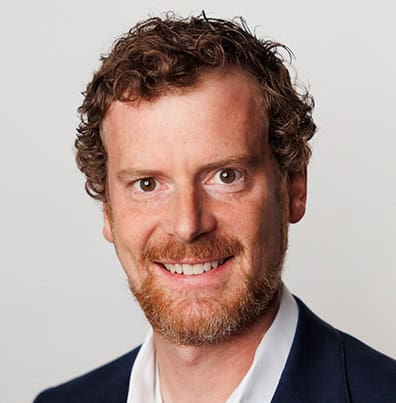
[00:00] Jude Boudreaux: Hello everybody, and welcome to our conversation today. My name is Jude Boudreaux. I’m a senior financial planner here at The Planning Center. I host the Living Beyond the Numbers podcast, and I’m part of CNBC’s Financial Advisor Council, where we get to discuss with the team there what issues we’re seeing as financial planners. I’m really excited to be here today and to host this conversation.
First, a couple of notes for you all as attendees. Your audio is muted, and we will be having a Q&A section. The best way for us to receive those questions is in the chat feature. In the screen I’m coming to you in, there should be a little button for chat. If you type any questions you have in there, I’ll be monitoring those throughout the conversation.
Let me introduce our two primary speakers today. Andrew Sivertsen is one of my partners here at The Planning Center. He’s a senior financial planner and has been with the firm since 2007. He helps small business owners, professionals, and retirees navigate life’s financial transitions. He’s earned a tremendous amount of national recognition, including being part of InvestmentNews’ 40 Under 40 and Financial Advisor Magazine’s 10 Young Advisors to Watch. Within the firm, other than working with clients, Andrew also co-leads the investment committee with Matt Knoll. Beyond the office, Andrew is past president and chair of the FPA NexGen community. He serves on the City of Moline Special Service Area Number Six Board of Directors and also coaches youth sports. At home, he’s a busy guy as a dad of four with two dogs.
Our guest of honor today is David Booth. For more than 50 years, David has been at the center of a monumental transformation in personal finance, collaborating with five Nobel laureates in economics along the way. As the founder of Dimensional Fund Advisors, an investment manager entrusted with more than $1 trillion in assets, he’s been part of a revolution that has transformed investing from a game of speculation into a discipline grounded in evidence and long-term thinking. In the book Stay Calm, he shares the lessons, mindset, and stories behind that revolution, and shows readers how to apply those concepts in their own lives. David, thanks so much for joining us, and Andrew.
[02:16] David Booth: Well, thanks.
[02:18] Andrew Sivertsen: Thank you, Jude. Really appreciate that. It’s very exciting to be in this conversation today. Dimensional Fund Advisors has been a part of The Planning Center since we were founded. Marty Kurtz started The Planning Center in 1998, a little before my time, but he read a book called Creating Equity by John Bowen that talked quite a bit about how to go independent and create your own firm, and it gives high accolades to Dimensional Fund Advisors. So pretty much from the get-go, it’s been part of our ethos. David, looking forward to talking with you. Why don’t you start by telling us why you wrote Stay Calm, and what you hope people take away?
[03:02] David Booth: Well, there’s a lot of anxiety, it seems, in the market right now, leading to a lot of negativity, and I thought the world could use a little book that talks about the optimism that comes from investing in public markets. People should be optimistic when investing in public markets, and hopefully, once they understand better how markets work, they will be more comfortable and confident that they can have a good long-term experience. It’s kind of for my parents, really, in a way. They’re no longer around, but they viewed themselves as outsiders, and that the insiders made all the money and would just take advantage of them, so they never really invested in public markets. If I’d been able to write the book for them when they were still around, I think they could have had a much easier retirement.
[04:12] Andrew Sivertsen: Absolutely. It’s a great read; I’ve enjoyed reading the book. Tell us a little bit about the everyday investor, someone who’s just starting out or rethinking their financial plan, and maybe they’re intimidated by those ups and downs of the markets you were talking about. How can Stay Calm help them invest better as they seek financial success?
[04:34] David Booth: Well, we’re going to start off with how the market works. Over the long haul, we have about 100 years now of research-quality data on stock and bond markets, and it portrays a picture that’s very, very encouraging. Over the long run, stocks have higher returns than bonds, which is what you would hope. And over the long haul, stocks have done about 10% a year. That’s over a hundred years, going through the Great Depression, World War II, the Great Recession, the pandemic, all that together: 10% a year. That should be encouraging to people. That’s only part of the good news. The other part of the good news is that professional money managers don’t seem to be able to beat the market. And that’s good news, because you can buy market portfolios. Everybody can, regardless of the size of investor. Nobody’s too small. You can buy market portfolios, and investments then do as well as the pros. How good is that? So stock and bond markets behave the way we hoped they would, and there’s no evidence that outsiders will be taken advantage of. So everybody ought to feel comfortable investing in public markets.
[05:54] Andrew Sivertsen: Absolutely, love that. Things are more accessible than ever. Of course, that can also lead to a lot of temptations, and I think you talked about that in your book. What would you say is the biggest misconception about investing that your book debunks?
[06:11] David Booth: The biggest misconception, I think, is that people think that in order to have a good investment experience, you have to stay up late at night and analyze statements and outguess the market, discover stocks that are selling at too low a price and buy those, and stocks that are selling at too high a price and sell those, or hire managers to do that for you. That’s a misconception, because there’s no evidence that people can do those things. And secondly, you don’t need to do any of that. Here again, how easy is this? You figure out how much you would like to have in relatively risky assets like stocks, and how much in relatively riskless assets like a money market fund or whatever. That’s really the key to investing. And once you go down that path, you’re more likely to be able to stay calm.
[07:06] Andrew Sivertsen: As an advisor, we see quite a bit of worry out there when markets get volatile. I remember seeing a headline during the COVID pandemic that roughly 10% of investors panic sold their portfolio at the bottom. So it seems like when markets get volatile, discipline and patience are usually the first things to go. What are some things you could say for how investors can stick to their strategy when panic sets in like that?
[07:36] David Booth: Well, first off, there is a lot of anxiety, but do you think there’s more anxiety now than investors felt during the Great Depression, or during World War II, or during the housing crisis? There’s a lot of periods where I think the anxiety’s even been higher than here, and stocks somehow managed to have a reasonable return throughout all of that. The pandemic was a particular case in point. People were saying, “Gosh, what am I supposed to do, and what’s going to happen?” And I go, well, I don’t know what’s going to happen, but here’s what I believe, which is that in times of turmoil, firms and people don’t just sit there and take it; they figure out how to improve their situation. So companies will come up with imaginative new goods and services, and there will be winners and losers. I don’t know who they’ll be, but this human spirit, this human ingenuity, comes in and says, “Look, I’m just not going to take this bad outcome. I’m going to figure out how to turn things positive.” That spirit will cause us to get back on track faster than you might think, which is what happened. The recession was only one quarter long, and people, if they got out at the end of the first quarter, let’s say they were down 20 percent. The market ended up 20% for the year, so it means the last nine months the market was up about 50%. And to your point, that’s one of the big concerns I have, and one of the reasons to write the book. If I come out with a second book, it may be called Stay Invested. You miss out on that 50% return, you’ve missed out. That means at the end, when you retire or whatever you’re using the money for, you’ll have a third less money than you would have had had you stayed invested. You don’t get any do-overs. There’s no mulligans in investing. So one of the big risks that’s hard to describe to people, though, is this idea of being out of the market when the market goes up. To get that 10% long-term return, you’ve got to be there. To be assured of getting it, you can’t be in and out of the markets and take the risk that you’re out at the wrong time.
[10:04] Andrew Sivertsen: I love that analogy. No mulligans in investing. In your book, you placed a lot of emphasis on a low-stress investment strategy, and low stress doesn’t mean your portfolio is never going to go down. Can you explain how you came to this understanding of why diversification, why discipline, why patience? How does that create resilience?
[10:30] David Booth: Well, I think people fundamentally want to feel safe. They want to feel safe in life, and they want to feel safe in investing. And by safe, it doesn’t necessarily mean you want things guaranteed. It just means that as you invest, you’ll recognize that markets go up and down. But if you have a sensible investment approach, and you pay attention and adapt to what’s going on, then most people can have this feeling of being safe. Whatever happens to the market, if you play the long-term game, you have a feeling like you’re going to be okay.
[11:10] Andrew Sivertsen: That’s great. How can investors avoid allowing their emotions to trigger how and when they invest? Do you have any examples of using an evidence-based investing mindset that can help investors trade in the anxiety they’ll have with markets for confidence and optimism?
[11:33] David Booth: Well, yeah, you just look at the data. Here again, I keep referencing these 100 years of data we have on all kinds of economic scenarios, and the results are, I think, staggering. So when the market dips, or whenever I feel a lot of anxiety, I just revert back to the basics, first principles, if you will: that the stock and bond markets are where buyers and sellers come together, and they don’t trade unless each side thinks they got a good deal. In the US stock market, people come to the market with similar information, and there’s a lot of trading volume. The buyers and sellers are largely big institutional investors on both sides. So these very sophisticated people are trading with each other, and what pops out are reasonable prices. Go back to the pandemic. People were confronted with the pandemic, and they go, “Gosh, the market’s down 20%. I’d better get out.” That’s not the right way to look at it. The right way to look at it is, the pundits seem to think this COVID thing is going to be two or three years, so down 20 or 25 seems to be about the right number. So there’s no reason for me to get out. That’s the difference in attitude.
[13:05] Andrew Sivertsen: I definitely think as an advisor, when we’re talking through that with clients, there is a lot of emotion around what’s going on in the markets. And I think you talk about in your book that a financial plan is not just a piece of paper that you follow. It’s constantly changing, and having a guide who can walk you through that financial plan is great. Tell us a little bit more about uncertainty. Uncertainty is defined as the state of having limited knowledge, making it impossible to exactly describe the present, predict the future, or fully know the outcome of a choice. In your book, you state that uncertainty shouldn’t be eliminated in one’s investment strategy. How can investors start to think of uncertainty as opportunity, and not as an unnecessary risk?
[14:04] David Booth: Well, let me start off with what you were alluding to, which is most people need a trusted advisor. When I describe investing and the optimism that comes from investing in public markets, people sometimes think, “Oh gosh, it’s really pretty simple.” No, investing is complex and uncertain, just as life is. And frequently what we do is talk a lot more about people’s life experiences and how they have dealt with uncertainty. Basically, you don’t want to try to predict things that are unpredictable. To the extent you can predict things, that’s fine. But manage what you can’t. That’s really the issue. In life, if there were no uncertainty, you wouldn’t have been able to progress the way you have. And similarly in investing, if there were no uncertainty, if everything were known for certain, then all investments would have the riskless rate of return. If there’s no risk, there wouldn’t be any exceptional return. So it’s the uncertainty in life and in investing that creates the opportunity. I sometimes say that uncertainty is underrated, because it is what creates the opportunity. Now, it comes with a lot of anxiety sometimes, so that’s what has to be managed. You don’t want to eliminate it. You want to manage the uncertainty. For example, you can’t predict what the market’s going to do. You can decide how much risk you want to take, and that’s really the name of the game.
[15:49] Andrew Sivertsen: I also really appreciated that section in your book: control what you can control, and manage everything else. When you think about what you can control, it really almost comes down to what’s in your skin. What choices you make, what you eat, who you talk to, when you go to sleep. And for the rest, with our planning and investment strategies, we’ve got a pretty good plan in place to try and manage the rest. Oh, go ahead.
[16:16] David Booth: Another aspect of dealing with uncertainty is, if you’ve followed what you’re talking about and come up with a sensible plan in life and in investing, then you’re more likely to be able to accept the consequences, or the outcomes. Outcomes are important, but investors need to learn that you want to judge yourself by the quality of the decision you made and not the outcome. If you made a good choice, it’s like in sports. In football, the right call could be a pass, but sometimes it goes incomplete. You made the right call, it just didn’t work out. And that’s part of the mindset you have to have to be an investor.
[17:12] Jude Boudreaux: To jump in on your thoughts on uncertainty, it really made me think about how, in life, the best things that I’ve done came with a lot of uncertainty. In a different way, of course, but going to speak to my wife for the first time at my friend’s wedding, when we first met as strangers, was a vulnerable thing. There was a lot of uncertainty in that, and look at all the positive things that came out of it. We’ve got two children, a tremendous amount of uncertainty there, but they add so much wonderful value to my life. So it’s about being strategic about those risks, if you will, about choosing which uncertainty to pursue and put ourselves into, because that’s where great things come from.
[17:55] David Booth: When people start dealing with uncertainty, often they think there’s got to be a right answer, an optimal answer. And typically, when you’re dealing with uncertainty, there’s no such thing as an optimal answer. There are only trade-offs. You could have started talking to the woman next to what turned out to be your wife. Who knows? You make these choices, and what you’ve done is always play for the long haul, particularly in investing. You’ve played for the long haul. Two kids, you’re right in the middle of it.
[18:37] Andrew Sivertsen: I also liked in your book how you talked about visiting your grandparents, and what that showed about your values. I think this was early on in your career: just the peace of mind that they had, focusing on being around people and the stories they shared. Maybe that ties in a little to the next question. When investors look at modern challenges like AI, these huge government debts around the world, a cascade of global tensions that never seem to stop, the immediate reaction is, “This time is different, and we’re not going to bounce back.” How can investors step back and recognize the historical parallels without panicking?
[19:25] David Booth: Well, I think first off, every time is a little different, but think about over the last hundred years how many different economic scenarios we’ve had. It’s hard to dream up a new one. So anxiety is just kind of part of the game, and that’s why you want to control how much risk you take. In investing, and in life, you’re going to have to take a few risks here and there. But it should be done in a controlled way.
[20:00] Andrew Sivertsen: That’s great. Another thing I loved about your book was reading about the early periods in the 1970s, when nobody really knew. You were just getting the data. No one had the data; they were just investing, thinking they knew things, and all of a sudden we’re creating systems and trying to figure this all out. It is interesting to look back over five decades of this work and say, wow, things have changed a lot. You’ve had a career in this industry for five decades, and this is your first book. Why are you writing it all down now?
[20:42] David Booth: Well, I was waiting until I thought I had a message. I didn’t think the world needed another book on how to invest, or that anybody would be interested in my memoir. But what this book is about is how to think about investing, and drawing parallels to what you’ve learned in life. One part of the book that’s important, I think, is the last section, which is talking about true worth and what’s really important to you. As you mentioned, my grandparents. I had this experience when I was still in the PhD program at Chicago and went home for Christmas, and was at my grandparents’ house with all my aunts and uncles and cousins, and everybody was having a great time except me. I was stressed out. I go, “What’s wrong with this picture?” And eventually I left school. But it taught me an important lesson, and I really also learned it from my parents. I characterized my parents as being wealthy. They just didn’t have much money. For them, what was really important was family. They grew up during the Depression, fought in World War II. Their point of reference was quite different than the world we live in today. So they got what they wanted out of life, and that’s what I learned. It’s more than just paying attention to the stock and bond markets. It’s paying attention to what’s going on in your personal life, and figuring out why you are investing.
[22:31] Andrew Sivertsen: That’s definitely great. Jude, we’re probably getting close to some Q&A, but while you’re pulling some of that up: you talked about the last section, and I love that, about the values. You said: “I told you at the beginning of the book that I was not going to tell you precisely how to invest your money, but I do want to leave you with perhaps the greatest investment tip I can offer: Never lose your sense of possibility. Resist knee-jerk cynicism and defeatism. Summon your reserves with pragmatic hope. Work diligently and have faith that your efforts will be rewarded. Believe markets work. Invest accordingly. Be a realistic optimist. For your portfolio, your plans, your values, and your life, every step along the way, just try to make the best choice you can in a way that’s consistent with your values and your vision of the good life. Things won’t always work out as hoped, and then you’ll have to adapt and figure out how to get back on track. But by being consistent with those values, you can at least honestly say that you did the best you could have done. That might feel like cold comfort at the moment, but think about how much worse it would be if you made a bad choice by abandoning your values. In such a case, you would feel not only like a fool, but also like a hypocrite.” I love that last chapter of your book.
[23:50] David Booth: Well, thanks. I haven’t read it in a while. I like that. I go, “Damn, that was pretty good.” I think that’s right. Once you accept how markets work and how to manage the risk of investing, then I think you’re led to being an optimist. In fact, I tell people I’m not really an optimist. I think I’m a realist. If the stock market didn’t offer investors a fair return, they wouldn’t invest. So it’s that dynamic that’s going on that’s really your protection. You don’t have any close parallels to that in life, unfortunately, but the economy and the people in the economy are always trying to make things better.
[24:39] Andrew Sivertsen: Tell us a little bit about five decades of this. I think everyone was expecting to hear about diversification, staying invested, not trying to time the markets. But these principles: why do you believe in them so much that you’ve dedicated your career to them?
[25:00] David Booth: Well, because we can really help people if they better understood how markets work. That’s why I left school. I thought I did want to be a professor, but I thought I’d want to try to apply these ideas, because they can really be helpful to people, and they have. If you look at the last 50 years, people started applying these ideas of market portfolios and developing a sensible mix between risky and riskless assets. It’s been a great experience. People are living much better in retirement now than people did in previous generations. I know there’s always anxiety at the moment, but the impact of this new way of thinking has really transformed an industry and made life better for all of us. And that’s still what keeps me excited about coming to work: trying to spread the word. You don’t have to do all the things you thought you had to do to be a good investor. There are some sensible guidelines and policies you can follow that should give you a great chance of having a good investment experience.
[26:21] Jude Boudreaux: A question I had in the back of my mind: like Andrew, I have a degree in finance, and in university I studied the three-factor pricing model from Gene Fama and Ken French. These are people you took classes with directly while they were developing this. I wonder if you can share a sense of what it was like when you were there with these now giants of the industry, who have been recognized by the Nobel Prize and in so many other ways. What was that experience like, being at the frontier at that time?
[26:58] David Booth: Well, by the way, Errol Morris did a movie about that and our involvement called Tune Out the Noise, which is free on YouTube. The reason I wanted to do the movie was to try to give people a sense of the excitement I experienced back at the University of Chicago in the late ’60s. It was a hotbed of new ideas and new research. It seemed like every month a landmark paper would come out, and none of the professors had gotten an economics Nobel Prize back then. Since then, the University of Chicago has kind of dominated the Nobel Prize thing. So I got to know these professors, and then when we decided to start Dimensional, Gene Fama was one of the founders and is still an active board member, and his young colleague came along, Ken French, and we’ve been working closely with him since we started 45 years ago. Then we found out we had to have a board of independent directors for our mutual funds, and Merton Miller, Myron Scholes, Bob Merton, Doug Diamond, they’ve all been independent directors of the mutual funds, and they’ve all got Nobel Prizes. So on the one hand, it’s been very, very inspirational, and on the other hand, these guys do ask tough questions. You don’t get any slack just because you’re old. They’re on top of the game. But it’s so stimulating. It’s been a great career, now over 50 years, trying to help people understand markets and how they work, and that even you, as an outsider, can have a good investment experience. That’s a pretty cool thing to work on over a career.
[29:15] Andrew Sivertsen: It is pretty neat. My oldest is a sophomore, so we’re starting to look at colleges and seeing all the lists, and I can’t remember which list it is now, but the University of Chicago Booth School of Business was listed as the number one business school in the nation. That’s a pretty neat honor. You mentioned being an outsider, and what that meant, especially in the early days, in the ’70s and ’80s, being able to see things differently. Do you still feel like an outsider five decades later? What does that look like to you?
[29:57] David Booth: Well, I hope I am. I worry about feeling like an insider, because outsiders challenge the orthodoxy. You always want to be challenging whatever it is you believe, or whatever you conclude, because whatever it is you think you know, frequently some of that turns out not to be true. Which is why this whole field is so exciting, because these ideas that popped up, diversification, risk control, paying attention to fees and taxes, have dramatically improved people’s lives. That’s pretty cool.
[30:39] Jude Boudreaux: I think it has made a tremendous difference. You mentioned your parents. Part of my inspiration for getting started on the advisory side was thinking about my own: my dad sold cars, and my mom cleaned houses. They never really had anybody to talk to them about investing or growing or saving for the future, and I often wonder how different their life could have been with just some small changes along the way. I think that’s something those of us who are fortunate to work with families get to see every day.
[31:10] David Booth: I have a story I actually mention in the book. After my parents passed away, I went to open their safe deposit box, and there was fifteen thousand dollars in cash in there. These are people who never had much money, but you can understand that kind of behavior, growing up in the Depression. But I said, look, suppose my dad, when he came back from World War II, had $15,000 to invest and got the stock market return over the next 40 years. This was in 1985. What would it be worth? It’d be worth over a million dollars. Then, a year ago, 40 years had passed since that experience. Over the last 40 years, what would $15,000 have grown to, had you gotten the stock market return? Over a million dollars. So that’s really the magic of compounding. You play for the long haul, stay invested, and over time these numbers really add up. And compounding also applies in life in general. You don’t start off every year with two new kids. You begin the year where you left off at the end of last year. So life is about compounding as well, compounding experiences.
[32:43] Jude Boudreaux: Oh, sure. And habits, health, things that leave dramatic impacts when compounded over long periods of time. I do have a question from the chat that I want to bring up. It might be a little more technical, but let’s give it a shot. One attendee says that in his lifetime, the U.S. dollar has been the most widely accepted currency for financial transactions. Now, perhaps the world market seems more concerned about the safety of the United States government, given the things happening in the bond market. Do you see more significant risk that countries might look to China as a world finance leader, which would impact the value of U.S. stocks or bonds?
[33:28] David Booth: Well, it’s a worry, but with things like currency, going back to school, you’re graded on the curve rather than an absolute standard. I’m not saying anything about how we’re managed, but it’s been truly remarkable to me how people have flocked to the dollar. We’ve been managed well, managed poorly, various governments have come and gone, and the U.S. has really been a tower of strength. I worry about it. You can screw things up. But I’ll take my chances on free enterprise and our system.
[34:13] Jude Boudreaux: I agree. For me, now being almost 50, seeing political administrations come and go, and all of the things that go on in modern American discourse, it’s the power of markets to be stable. Not in that they don’t ever change in value, but that, okay, this is the policy now; great, we’re going to adjust and adapt, and here’s how we see investments. Or interest rates have changed; wonderful, we’ll adapt, and here’s how things change. That strength just continues to show up because of everybody participating within the marketplace.
[34:51] David Booth: Yep.
[34:53] Jude Boudreaux: Great. Andrew, I realize we’re coming up on time. Any other questions you wanted to make sure we got in today? Anything for the group? If they want to still throw something in, we’ve maybe got time for one or two more.
[35:12] Jude Boudreaux: Let’s give that just a moment and see if anybody else chats in. One of the notes I had was about the optimism for the future that you expressed in the book. I know we’ve touched on it a little through our conversation, but do you have any closing thoughts about the future? The world is uncertain, but one of our retired partners, Cicily Maton, who founded our Chicago office, always said the future is no more uncertain than the present. I wonder about your thoughts on uncertainty in the future.
[35:46] David Booth: Well, there’ll be plenty of it. And the beauty of our way of investing is you just assume that whatever the future holds is already embedded in market prices. So you don’t have to forecast the future. It comes up a lot with AI these days: which companies are going to really succeed over the long haul? I go, I don’t know which ones. You want to buy them all. And keep in mind, I think those are good companies to invest in, but we don’t know who the big winners will be, and it may surprise you. For example, I always go back to the gold rush in California in the mid-19th century. Who made the money? Well, maybe some gold miners got lucky there. But a big winner was the jeans companies, and the companies that supplied all the materials to the miners.
[36:57] Andrew Sivertsen: Oh, sure. As the world changes, so many things have to change and innovate to meet those demands, like energy having to innovate to meet the demands of a more computerized, AI-driven future. There’s opportunity in so many different spaces. It’s fascinating if you step back and think about it.
[37:21] Jude Boudreaux: I’ve got no other questions from the Q&A. David, any closing thoughts or final notes?
[37:28] David Booth: No, it’s been a pleasure. I’ve enjoyed chatting with you. I’m just still trying to spread the word that if you’re like my parents and think that you can’t have a good investment experience, that’s just not true. I would recommend for most people that they find some advisor they can trust and come up with a sensible process that they can put in place, and adapt and be flexible over time. And over the long haul, you’re probably going to be okay.
[38:08] Jude Boudreaux: Perfect. I think that’s a great place for us to wrap up today. Andrew, any final thoughts?
[38:13] Andrew Sivertsen: It’s pretty neat just to hear the 50-plus-year history. Five decades is very impressive. I was talking to our founder, Marty, this week about our history. We’re coming up just shy of a year from 30 years, and he originally had the vision of, wouldn’t it be cool if in 50 years we had a different group of advisors talking to a different group of clients about the same pool of money. And he said, wow, 30 years, that just really makes our 50-year vision seem small. Time’s kind of funny how that works. It’s pretty neat to really appreciate the partnership, as DFA has been a long-time partner, and hopefully a strategic partner for many years to come. Really appreciate your time today, David.
[39:04] David Booth: Okay, well, thank you. It’s been a pleasure.
[39:06] Jude Boudreaux: Thanks so much, David. And to everybody who’s part of this, I just wanted to let you know that we do have copies of the book. I’ll coordinate with your advisors to make sure we send one to everybody who’s here. We’ll also send all of you who attended a notification when the recording is available. If you have any follow-up questions, please reach out to your advisor at The Planning Center, or you can email me at jude@theplanningcenter.com, and we’ll get any of your questions answered. Thanks, everybody, for joining. David, especially, thanks for being a part of this, and we’ll be talking to everybody soon.